The Ha Giang Loop is the great road trip of northern Vietnam, and the decision that matters most is not the route but who rides. Give it three or four days on the road, plus a travel day each way from Hanoi. Unless you are an experienced rider with a license that is valid in Vietnam, sit behind an easy rider. Since April 2026 only licensed travel companies may organize and sell loop tours, so book one of those.
How we built this guide: on 2 October 2026 we checked UNESCO's geopark page, Vietnam's national tourism site, the UK and Australian governments' travel advice, 2024 to 2026 news reports on loop safety rules, floods, Lung Cu and the buckwheat festival, bus listings on Vexere and Sao Viet's own site, and 2026 price guides from two tour companies. We did not ride the loop for this update.
How does the Ha Giang Loop work for a first-time visitor?
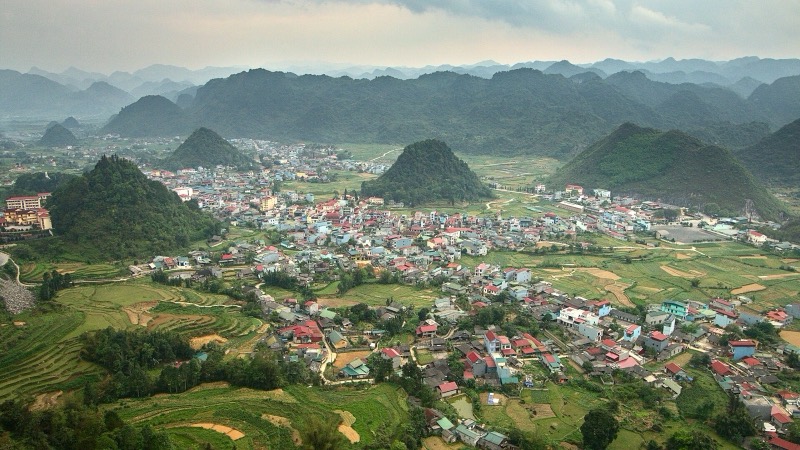
The loop is a multi-day circuit of about 350 km that starts and ends in Ha Giang city and climbs onto the karst plateau along the Chinese border. Wikipedia's route summary traces it north and east through Quan Ba, Yen Minh, Dong Van and Meo Vac before it returns to the city, and Vietnam News puts the length at about 350 km. Much of it crosses the Dong Van Karst Plateau UNESCO Global Geopark, which UNESCO describes as 234,500 hectares, about 60% limestone, and home to 17 ethnic groups, including the Mong, Lo Lo, Pu Mong, Co Lao, Bo Y, Dao and Tay.
Names changed in 2025, when Ha Giang province merged with Tuyen Quang into a new Tuyen Quang province (vietnam.travel), so official notices about the loop now come from Tuyen Quang.
How many days do you need for the Ha Giang Loop?
Four days on the loop is the sweet spot, three is the minimum, and you need a travel day at each end. Both 2026 price guides we checked treat three to four days as normal, and Asia Tour Advisor says the fourth day buys time at viewpoints and side trips such as Lung Cu Flag Tower and Du Gia waterfall. Buses from Hanoi take about six hours, so plan five or six days from Hanoi back to Hanoi.
Our suggested four days from Ha Giang city:
- Ha Giang city to Yen Minh, via the Quan Ba viewpoint known as Heaven's Gate.
- Yen Minh to Dong Van, via the Vuong family palace at Sa Phin and a detour to Lung Cu.
- Dong Van over Ma Pi Leng Pass to Meo Vac, then on to Du Gia.
- Du Gia back to Ha Giang city, and the bus to Hanoi if you have the energy.
On three days, drop Lung Cu and Du Gia and ride from Meo Vac straight back.
Should you ride yourself or go with an easy rider?
Go with an easy rider unless you are an experienced rider who holds a license that is valid in Vietnam. On an easy rider tour a local driver rides and you sit behind. Asia Tour Advisor's guide says that without solid manual-motorbike experience, the easy rider option is by far the safest choice, and we agree.
| Option | 2026 price per person | Who it suits | What to check |
|---|---|---|---|
| Easy rider tour, 3 days | About $160 to $200 (4.2 to 5.2 million VND) | Most visitors | The company's license and the driver's experience |
| Easy rider tour, 4 days | About $210 to $280 (5.5 to 7.3 million VND) | A slower pace with Lung Cu and Du Gia | As above |
| Self-ride tour with a guide | About $130 to $170 (3.4 to 4.4 million VND) for 3 days | Licensed riders with mountain experience | Your license and insurance |
| Independent rental | $8 to $15 a day semi-automatic, $20 to $50 manual (about 210,000 to 1.3 million VND) | Experienced, licensed riders | Bike condition, deposit terms, no backup |
| Private car tour | From about $300, varies by group | Families and anyone who will not ride | Less of the open-air experience |
Tour prices come from Asia Tour Advisor (June 2026) and rental prices from Frontier Travel Vietnam (June 2026). Both companies sell loop tours.
What license do you need?
The rules depend on your passport. The UK government says British riders need the 1968 international driving permit plus their UK license, that riding without third-party insurance is illegal, and that helmets are compulsory for riders and passengers. Australia's Smartraveller, updated on 24 September 2026, says you must have a valid Vietnamese license to drive or ride, including motorcycles of 50cc or more. Other nationalities should check their own government's advice; our getting around Vietnam page has the wider picture.
The UK advice adds three points worth taking seriously on the loop: make sure your travel insurance covers your planned activity, never leave your passport as a deposit for a rental bike, and know that after an accident you could face criminal charges and have to pay compensation, even for minor injuries.
Easy riders are safer, not risk-free
A 19-year-old British woman died in early April 2026 during an easy rider tour, DTiNews reported. Tuyen Quang's tourism department then tightened the rules, per Vietnam News. Only licensed travel agencies may organize or sell loop tours. Operators must keep route and emergency plans, contracts, passenger lists and insurance records, and must brief tourists on safety rules and protective gear. Rental services must supply maintained bikes and helmets. In practice, book through a licensed company, ask how long your driver has been riding the loop, and refuse a bike or helmet you do not trust.
How dangerous are the roads, and what else can go wrong?
The roads are steep, winding and shared with trucks, and the weather can close them. DTiNews quotes a local guide saying the steep, winding roads challenge even experienced local riders, and it describes two foreign tourists losing control on a downhill bend near Bac Sum Pass on 8 April 2026 and nearly hitting a truck. The UK government says motorbike accidents are common in Vietnam and have killed and injured British nationals. It adds that remote mountain areas are hard for rescuers to reach, with flooding and landslides especially in the rainy season.
Rain is the main seasonal hazard. In June 2024 floodwater covered a 700 m stretch of National Road 4C between Dong Van and Meo Vac, and police helped 400 foreign tourists across, Vietnam News reported. The provincial tourism department asked agencies to halt unsafe activities and set up checkpoints to keep people out of landslide-prone areas.
- Ride in daylight and stop when fog or rain closes in; Wikipedia's loop article notes that fog and rain cut visibility on the passes.
- Do not drink and ride. The UK government says any alcohol in your system can mean a fine and possible imprisonment.
Our Vietnam safety page covers traffic and insurance in more detail.
What should you see on the loop?
Ma Pi Leng Pass is the reason to come; everything else is a bonus you can trade for time.
Ma Pi Leng Pass and the Nho Que River
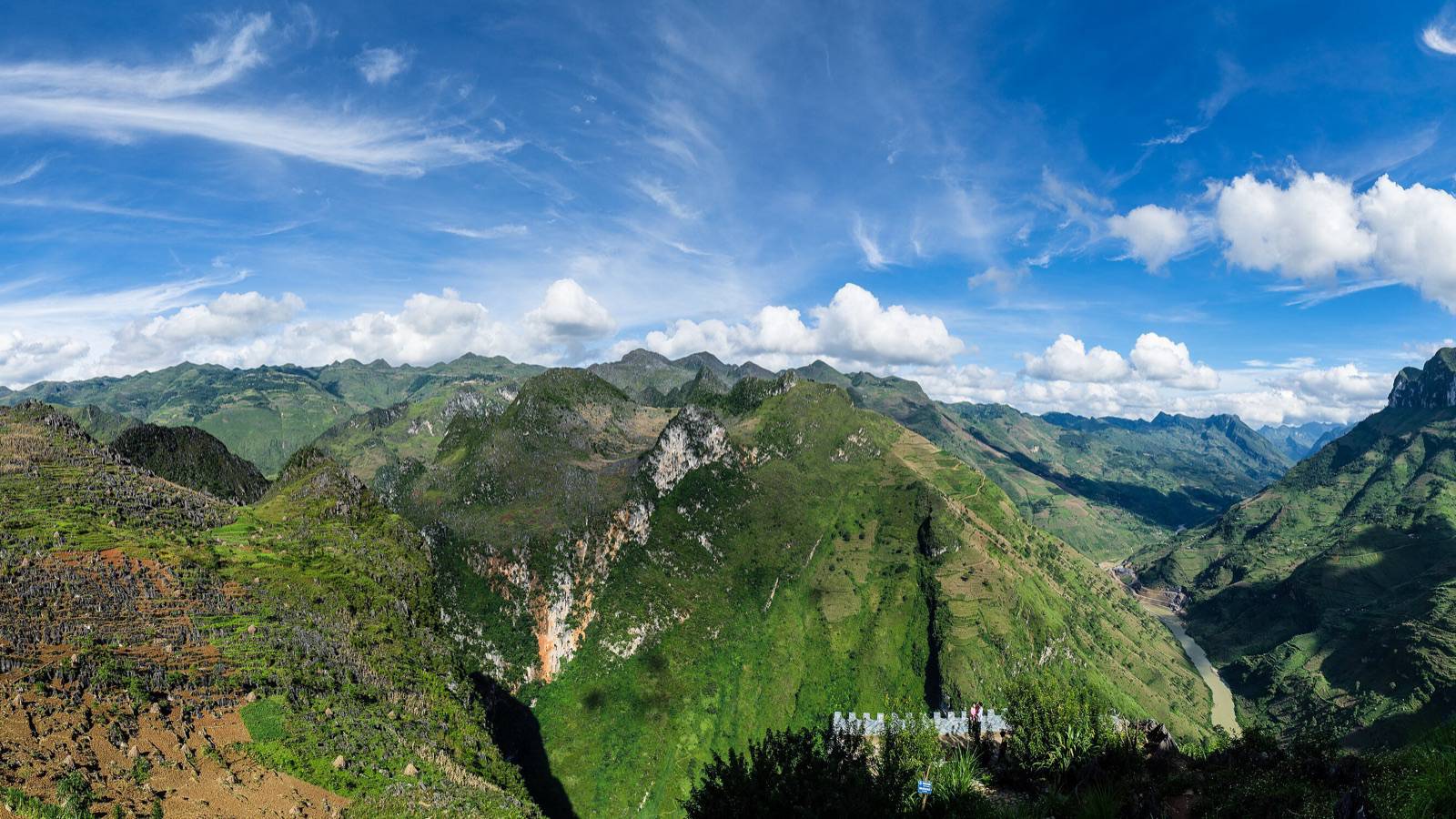
The road between Dong Van and Meo Vac runs for about 20 km along cliffs above the Nho Que River gorge and the Tu San canyon, per Wikipedia. Heights differ by source: UNESCO says the pass rises to 1,200 m, while Wikipedia puts the crest at about 1,500 m. The road was built as part of the Happiness Road, completed in the mid-1960s, and Vietnam's culture ministry listed the Ma Pi Leng landscape as a national monument in 2009. Many tours add a boat trip on the Nho Que River below the pass; ask whether yours includes it.
Dong Van old quarter and the Vuong family palace
Dong Van is the best overnight stop on the plateau. UNESCO describes its ancient quarter as about 40 preserved houses dating back to 1890, combining market spaces with homes. At Sa Phin, the Vuong family palace was built in 1902 in a traditional Chinese style, according to vietnam.travel, from green stone, Po mu wood and terracotta tiles, per UNESCO.
Lung Cu Flag Tower
Lung Cu marks Vietnam's northern tip, and it is the easiest stop to drop if you are short of time. Vietnam News describes a 34.85 m tower at 1,470 m above sea level, about 24 km from Dong Van town, flying a 54 square meter flag for Vietnam's 54 ethnic groups, and vietnam.travel mentions a climb of about 200 steps. Strictly, it is a symbol rather than the exact spot: Wikipedia notes that the furthest north point on the border lies more than 3.3 km further north.
Quan Ba and Du Gia
Quan Ba's Heaven's Gate, on the first day, looks over winding roads and misty valleys at the gateway to the geopark, per UNESCO and vietnam.travel. Du Gia and its waterfall are the usual four-day extra.
Where should you stay on the Ha Giang Loop?
Sleep in Dong Van if you only pick one place for a good night, and in a village homestay for at least one night. Most tours mix homestays and guesthouses, and Asia Tour Advisor lists both as standard inclusions.
| Stop | Best for | Trade-offs |
|---|---|---|
| Ha Giang city | Bus arrivals, rental shops and tour offices; first and last night | Not on the plateau |
| Yen Minh | Breaking up the first day's ride | Mainly a stopover |
| Dong Van | The old quarter, Lung Cu and the start of Ma Pi Leng | Fills up around the buckwheat festival |
| Meo Vac | The far side of Ma Pi Leng | Quieter; check what your room includes |
| Du Gia | Village homestays and the waterfall on four-day loops | A side trip off the main loop |
Frontier Travel Vietnam's June 2026 guide puts local homestays at about $10 to $30 a night, budget hostels at $5 to $15 and mid-range hotels at $30 to $70. Ask whether a homestay bed is in a shared room or a private one before you book.
How do you get to Ha Giang from Hanoi?
By bus, in about six hours. Vexere listed 160 daily departures from more than 20 operators on 1 October 2026, with an average trip of 6.2 hours over 256 km and an average fare of 390,000 VND, about $15; several leave from My Dinh bus station. Sao Viet lists its VIP cabin bus from 350,000 VND, timed at 6 hours 45 minutes for 300 km, and Vietnam's tourism board says buses run day and night. Night buses save a day, but the UK government notes that bus crashes are more likely at night, when drivers may be tired. Our Hanoi to Ha Giang guide compares operators and pickup points.
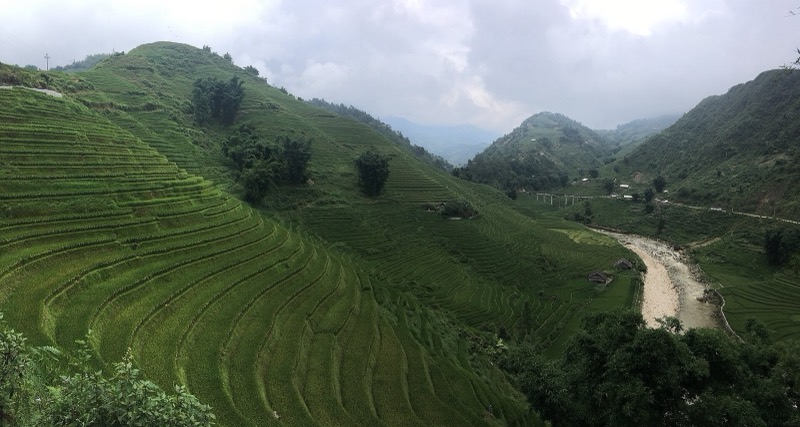
Weighing Ha Giang against Sapa? Our Sapa guide covers the trekking alternative: Sapa is about walking through terraced valleys, Ha Giang about the road.
How do you get around once you are there?
On two wheels, or in a car with a driver. Vietnam's tourism board notes that public transport around the province is limited and that experienced riders can rent a motorbike in Ha Giang city (vietnam.travel).
How much does the Ha Giang Loop cost?
The tour or rental is the main cost; food and rooms on the plateau are cheap. We converted at about 26,000 VND to US$1, between Vietcombank's published USD buying and selling rates (25,760 and 26,170) on 2 October 2026. Where a source gave dollars, the VND figure is our conversion.
| Item | Price in VND | About in USD | Where we saw it |
|---|---|---|---|
| Bus Hanoi to Ha Giang, average fare | 390,000 | $15 | Vexere, 1 Oct 2026 |
| Easy rider tour, 3 days | about 4,200,000 to 5,200,000 | $160 to $200 | Asia Tour Advisor, Jun 2026 |
| Easy rider tour, 4 days | about 5,500,000 to 7,300,000 | $210 to $280 | Asia Tour Advisor, Jun 2026 |
| Semi-automatic rental, per day | about 210,000 to 390,000 | $8 to $15 | Frontier Travel Vietnam, Jun 2026 |
| Fuel for the full loop | about 390,000 to 910,000 | $15 to $35 | Frontier Travel Vietnam, Jun 2026 |
| Homestay, per night | about 260,000 to 780,000 | $10 to $30 | Frontier Travel Vietnam, Jun 2026 |
| Local meal | about 52,000 to 210,000 | $2 to $8 | Frontier Travel Vietnam, Jun 2026 |
Tours usually include the bike, fuel, rooms and most meals, but check whether they include the bus from Hanoi, which Frontier estimates at $15 to $40 each way. Lung Cu and the Vuong palace charge small entrance fees, but we could not confirm 2026 prices from an official source.
What food is worth seeking out on the loop?
Eat what the plateau grows: corn, buckwheat and slow-cooked broths. The tourism board's Ha Giang food guide describes au tau porridge, which Mong cooks make by simmering the au tau tuber for four to five hours before adding bone broth and sticky rice. It also covers thang co, a soup of bones and organs with 12 spices, once made with horse meat and now usually with buffalo, beef or pork, eaten with men men, a grilled corn cake. Look out, too, for buckwheat cakes, five-color sticky rice dyed with natural leaves, and Dong Van's steamed rice rolls.
When is the best time to visit Ha Giang?
September to November is the best all-round season, and late October to November adds buckwheat in flower. There is no WMO-listed station on the plateau, so this table draws on the tourism board, UNESCO and recent news reports.
| Months | What to expect | Source |
|---|---|---|
| January to February | Peach and plum blossom season | UNESCO |
| April to June | Pleasant and warm | vietnam.travel |
| July to August | Can be very hot, with regular monsoon rains; floods and landslides possible from June | vietnam.travel, Vietnam News |
| September to November | Cooler, with dry roads, rice harvests and clear views | vietnam.travel, Asia Tour Advisor |
| October to December | Buckwheat in flower; the festival opens on 6 November 2026 | VietnamPlus |
VietnamPlus reported in August 2026 that 400 hectares were planted in three batches so the flowers last from October to December, and that the 12th festival, themed Echo of the Stone Land, opens on the evening of 6 November at Youth Square in Dong Van. UNESCO's geopark page gives October to November as the bloom. Book rooms in Dong Van early for festival week. For the rest of the country, see best time to visit Vietnam.
Key facts at a glance
- Loop length: about 350 km, usually ridden in three to four days (Vietnam News).
- Geopark: 234,500 ha, about 60% limestone, home to 17 ethnic groups (UNESCO).
- License rules: UK riders need the 1968 international driving permit plus a UK license (FCDO); Australians need a Vietnamese license for 50cc or more (Smartraveller).
- Bus from Hanoi: 6.2 hours and 390,000 VND on average, 160 departures a day (Vexere).
- Buckwheat festival: opens 6 November 2026 in Dong Van (VietnamPlus).
Limitations
Tour and rental prices come from two tour companies' June 2026 guides, not from a survey of operators, and both companies sell loop tours. License rules differ by nationality, and we cite only the UK and Australian governments. The April 2026 operator rules come from press reports; we did not see the department's original notice. Ma Pi Leng's height differs between UNESCO (1,200 m) and Wikipedia (about 1,500 m), and we could not confirm 2026 entrance fees for Lung Cu or the Vuong palace. Weather notes are general patterns, not forecasts. Before you set off, check the forecast and any road closures, confirm your operator's license and what your insurance covers, and keep a spare day in the rainy months.