If your passport is not on Vietnam's visa-exemption list, you need an e-visa, and the only place to buy it at the government price is the official portal. It costs US$25 for one entry or US$50 for multiple entries and covers up to 90 days. Twenty-four countries, mostly European plus Japan and South Korea, can skip the visa for 45 days until 2028.
How we built this guide: we read the Immigration Department's e-visa portal (fees, FAQ and the full border-gate list), the Ministry of Foreign Affairs' exemption list, the two 2025 exemption resolutions as published by Vietnamese embassies, and the UK and Australian travel advice, all on 2 October 2026. We did not apply for a visa ourselves for this update.
Do I need a visa for Vietnam?
You need a visa unless your nationality is covered by a unilateral exemption or a bilateral agreement, or you fly straight to Phu Quoc island. Check the three groups below, then apply for the e-visa if you are not in any of them. The portal explains that visitors from unilaterally exempt countries receive a 45-day stay, while treaty-based exemptions follow the treaty, with 30 days as the default when a treaty sets no limit (Immigration Department).
Which countries get 45 days visa-free?
Two government resolutions give 45 days from the date of entry, regardless of passport type. They differ on purpose and end date, so read the right row.
| Resolution | Countries | Purpose | Valid |
|---|---|---|---|
| 44/NQ-CP (7 March 2025) | United Kingdom, France, Germany, Italy, Spain, Denmark, Sweden, Norway, Finland, Russia, Japan, South Korea | Any purpose | 15 March 2025 to 14 March 2028 |
| 229/NQ-CP (8 August 2025) | Belgium, Bulgaria, Croatia, Czech Republic, Hungary, Luxembourg, Netherlands, Poland, Romania, Slovakia, Slovenia, Switzerland | Tourism | 15 August 2025 to 14 August 2028 |
The first row comes from the Embassy of Viet Nam in Japan and the second from the Embassy of Viet Nam in Belgium, which adds that passports need six months of validity. Resolution 229 is for tourism, so business visitors from those 12 countries should get an e-visa.
Which countries have bilateral visa exemptions?
Ordinary passport holders from these countries are exempt under agreements listed by the Ministry of Foreign Affairs. Its list was last updated to 14 March 2025, so confirm with your nearest Vietnamese embassy if your trip depends on it.
| Stay allowed | Countries (ordinary passports) | Conditions noted by the ministry |
|---|---|---|
| 90 days | Chile, Panama | No income-earning activity |
| 30 days | Cambodia, Indonesia, Laos, Malaysia, Myanmar, Singapore, Thailand, Kyrgyzstan, Mongolia | Most require six months of passport validity |
| 30 days | Kazakhstan | No more than 90 days in any 180 |
| 30 days | Belarus | No more than 90 days per calendar year |
| 21 days | Philippines | Round-trip or onward ticket |
| 14 days | Brunei | Six months of passport validity |
There is one more route. The ministry's list confirms that foreigners arriving from abroad directly into Phu Quoc get 30 days visa-free, including those who transit through another Vietnamese international airport without leaving the transit area. That stay covers Phu Quoc only.
Watch out: the United States, Canada, Australia, New Zealand, India and Ireland are not on any of these lists. Travelers from those countries need an e-visa or an embassy visa.
How does the Vietnam e-visa work?
The e-visa is an online visa issued by the Immigration Department of the Ministry of Public Security. According to the official portal, it is valid for a maximum of 90 days, for single or multiple entries, and the fee is US$25 for a single-entry visa or US$50 for a multiple-entry visa, paid by card through the portal and non-refundable if the visa is refused.
The portal describes three steps: fill in the application form, which starts with uploading your passport photo page and a portrait, pay the fee, then receive the e-visa by email or on the portal. The instructions page asks for a recent 4x6 cm portrait in JPG, under 2 MB, facing forward with no hat and no glasses, on a white background.
The portal's FAQ adds three rules that trip people up:
- Enter your full name, including middle names, exactly as it appears in the machine-readable line of your passport.
- Your passport must stay valid at least 30 days beyond the e-visa.
- You can apply up to one year before your planned entry, but only from outside Vietnam.
How long does processing take?
The English pages of the portal do not publish a guaranteed processing time, so we cannot quote one. Apply at least a week or two before departure, and longer before Tet or other busy holidays. You can check progress on the portal's search page with your application code, date of birth and email.
How do I spot a fake e-visa website?
The Immigration Department names only two addresses: evisa.gov.vn and thithucdientu.gov.vn (FAQ). In July 2026 the state news agency reported that fraudsters register misleading domain names and buy search ads, and that sites promising instant visas, urgent processing or guaranteed approval are red flags (VietnamPlus). Australia's government gives the same advice: only use the official eVisa website (Smartraveller).
Type the address yourself rather than clicking an ad, and check that the price at checkout is US$25 or US$50. For the scams you may meet after landing, see our safety guide. Then read the approved visa carefully. Smartraveller warns that a typo or a missing middle name can mean a correction fee, a refused boarding or even deportation.
Which airports and border crossings accept the e-visa?
You must enter and leave through an international border gate on the government's list. On 2 October 2026 the official list had 15 airports, 27 land gates and 39 seaports.
| Gate type | Count | Examples travelers use most |
|---|---|---|
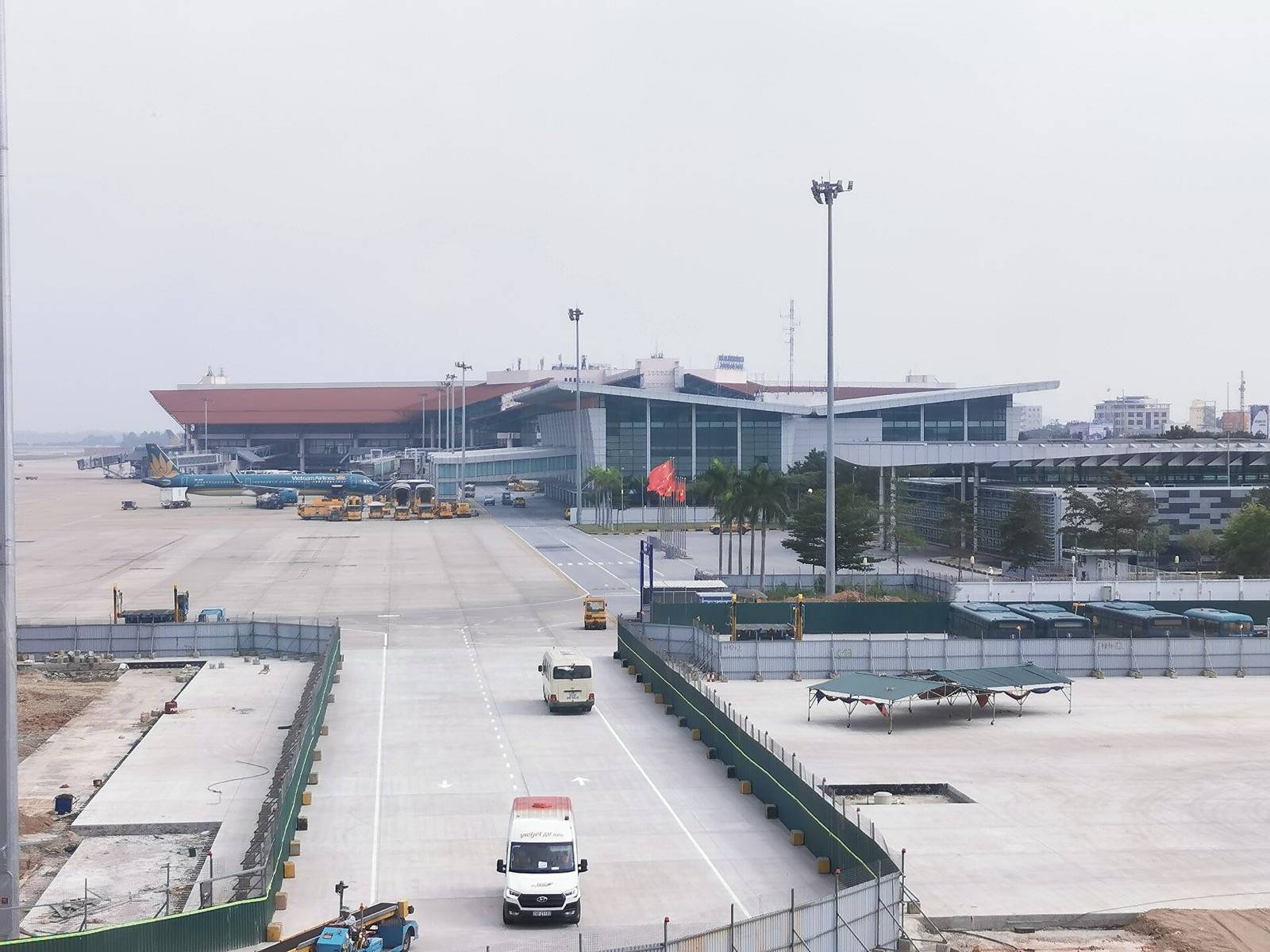
| Airports | 15 | Noi Bai (Hanoi), Tan Son Nhat (Ho Chi Minh City), Da Nang, Cam Ranh (Nha Trang), Phu Quoc, Cat Bi (Hai Phong), Phu Bai (Hue), Can Tho, Lien Khuong (Da Lat), Van Don |
| Land | 27 | Moc Bai and Xa Mat (Cambodia), Tinh Bien and Ha Tien (Cambodia), Lao Bao, Cau Treo and Na Meo (Laos), Huu Nghi, Lao Cai and Mong Cai (China) |
| Sea | 39 | Chan May, Da Nang, Nha Trang, Hon Gai, Hai Phong and Ho Chi Minh City ports, used mostly by cruise passengers |
If you land at Noi Bai or Tan Son Nhat, our Hanoi and Ho Chi Minh City guides pick up from there. You do not have to leave through the gate you entered by, as long as both are on the list (FAQ). The UK government's advice is stricter in wording and says e-visas restrict you to the points you select, so pick your real entry and exit points on the form to avoid arguments at the border (FCDO).
What happens when I arrive?
At immigration you show your passport and, if you have one, your printed or saved e-visa, and the officer stamps a date by which you must leave. Check that date before you walk away: the UK government notes that immigration will not change it once you have left the airport or land border, and a wrong date can later look like an overstay (FCDO).
A few newer steps are worth knowing:
- Pre-arrival form. The Immigration Department recommends completing a pre-arrival form at prearrival.immigration.gov.vn (portal notes). Smartraveller says arrivals at airports such as Ho Chi Minh City, Hanoi and Phu Quoc are encouraged to complete it within 72 hours of arrival, and the FCDO says it was not mandatory at Tan Son Nhat when it last checked.
- Health declaration. The FCDO says that from 1 July travelers may be asked for a health declaration, possibly with proof of vaccinations, and Smartraveller gives the same warning; details were still unclear when we checked.
- Domestic flights. Carry the same passport you entered with; Smartraveller says you may be refused boarding with a different one.
- Connections. If you change from an international to a domestic flight in Hanoi or Ho Chi Minh City, you clear immigration first, even if your final destination is abroad (FCDO).
If you hold an e-visa but forget to show it, you may be admitted as visa-exempt with a shorter stay. The FAQ says to present your e-visa at the border and report any error immediately.
Can I stay longer than my visa allows?
Plan your length of stay before you fly, because changing it inside Vietnam is hard. If you are visa-exempt for 45 days and want longer, the FCDO suggests the 90-day multiple-entry e-visa as the simple option. The portal says e-visas are issued only to foreigners outside Vietnam, so you would need to leave and re-enter to start one. For stays beyond 90 days, the FCDO points travelers to the Immigration Department.
What happens if I overstay?
Overstaying is a fined offense, and you may not be allowed to leave until you pay. Decree 282/2025/ND-CP, in force since 15 December 2025, sets fines by length of overstay, as reported by Tuoi Tre News. We convert at about 26,000 VND to US$1, close to Vietcombank's published US dollar rates on 2 October 2026 (25,760 buying cash, 26,170 selling).
| Overstay | Fine (VND) | About (US$) |
|---|---|---|
| Under 16 days | 500,000 to 2,000,000 | 19 to 77 |
| 16 to under 30 days | 5 to 10 million | 190 to 385 |
| 30 to under 60 days | 10 to 15 million | 385 to 575 |
| 60 to under 90 days | 15 to 20 million | 575 to 770 |
| 90 to under 180 days | 20 to 25 million | 770 to 960 |
| 180 days to under 1 year | 25 to 30 million | 960 to 1,150 |
| 1 year or more | 30 to 40 million | 1,150 to 1,540 |
Our money guide explains the dong and exchange rates. Deportation is also possible. The FCDO adds that overstayers can be prevented from leaving until the fine is paid and may be barred from future visits.
Key facts at a glance
- E-visa fee: US$25 single entry, US$50 multiple entry, non-refundable, maximum 90 days (Immigration Department).
- Official e-visa addresses: evisa.gov.vn and thithucdientu.gov.vn only (e-visa FAQ).
- 45 days visa-free for 12 countries until 14 March 2028 under Resolution 44/NQ-CP (Embassy in Japan) and 12 more for tourism until 14 August 2028 under Resolution 229/NQ-CP (Embassy in Belgium).
- E-visa gates on 2 October 2026: 15 airports, 27 land crossings, 39 seaports (border-gate list).
- Phu Quoc: 30 days visa-free for direct international arrivals, island only (Ministry of Foreign Affairs).
- Overstay fines start at 500,000 VND and reach 30 to 40 million VND for a year or more under Decree 282/2025/ND-CP (Tuoi Tre News).
Limitations
Visa rules in Vietnam change by government resolution, sometimes with only a few weeks' notice, and the exemption windows above end in 2028. The Ministry of Foreign Affairs' bilateral list we used was last updated in March 2025, and the e-visa portal's own link to its exemption list could not be opened when we checked, so confirm your nationality with a Vietnamese embassy before you book. We could not find an officially published e-visa processing time. Overstay fines come from a news report of the decree rather than the decree text itself. Before you fly, re-check the fee and border-gate list on evisa.gov.vn, the stamp date on arrival, and any new pre-arrival or health declaration requirement with your airline.