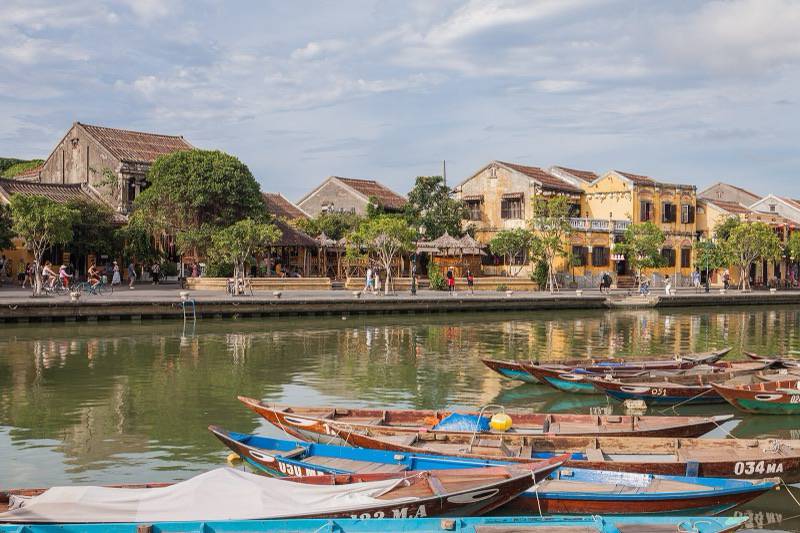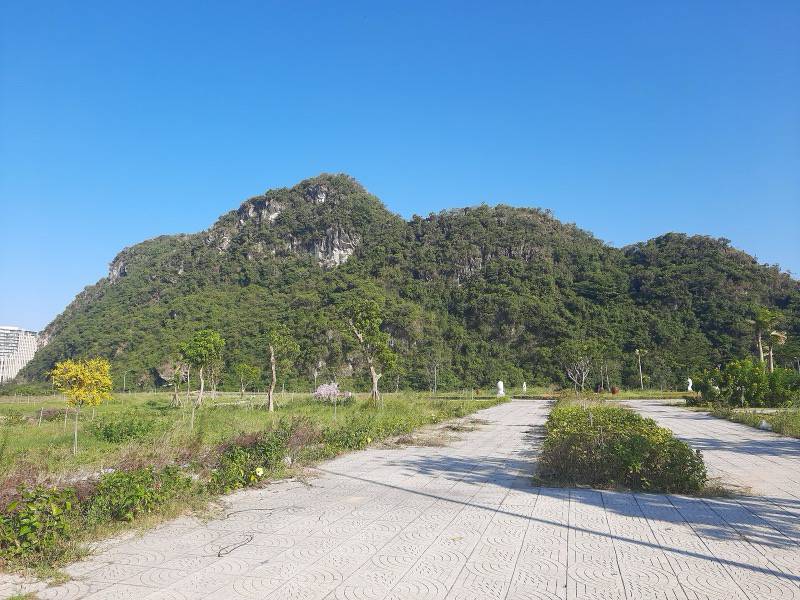
Da Nang is the easiest place in central Vietnam to land, sleep well and move on from. The airport is a 10 to 15 minute ride from the center, a long city beach runs along its eastern side, and Hoi An and Hue are both within reach for a day. Give the city two or three days of its own, and be choosy about which paid attractions deserve a full day.
How we built this guide: on 2 October 2026 we checked Da Nang's official tourism site, Vietnam's national tourism site, Grab's airport ride page, the Vietnam News Agency's July 2026 report on Ba Na Hills ticket prices, the Ministry of Construction's published climate tables, UK travel advice, 2026 beach safety reporting and published cost data. We did not visit Da Nang for this update.
How does Da Nang work for a first-time visitor?
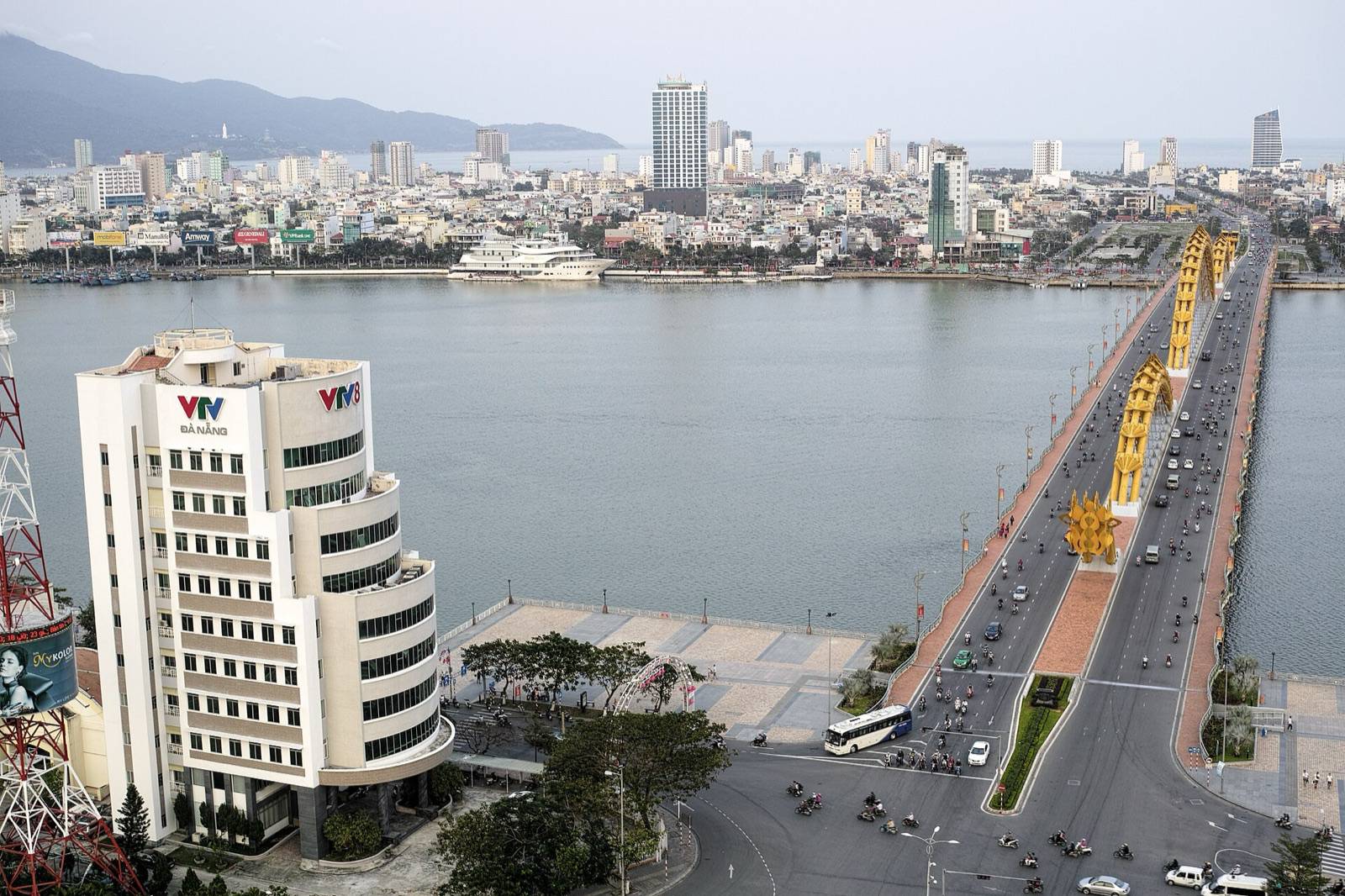
Da Nang is a river city with a beach attached. The Han River runs north into the bay, with the older center, markets and the airport side on its west bank, and the long beach strip and the Son Tra peninsula on the east. Bridges tie the two halves together, the best known being the Dragon Bridge, 666 m long and opened on 29 March 2013, which links the airport side directly to the beaches.
The city also got much bigger on paper. The National Assembly merged Da Nang with Quang Nam province on 12 June 2025, and the new Da Nang covers 11,859.59 square kilometers with 3,065,628 residents in 94 commune-level units. The change took effect on 1 July 2025, and it means Hoi An is now part of Da Nang city too (Bao Van Hoa). For a visitor, the practical effect is new ward names on addresses and maps.
How many days should you spend in Da Nang?
Two to three days suits most travelers, and the national tourism site builds its own suggested itinerary around three days.
- Day one: My Khe beach early, the Cham Museum or the Han River in the afternoon, and the Dragon Bridge after dark.
- Day two: the Son Tra peninsula in the morning, the Marble Mountains in the afternoon.
- Day three (optional): Ba Na Hills, which takes most of a day on its own.
If Da Nang is your base for Hoi An and Hue, add a day for each.
Where should you stay in Da Nang?
Stay on the east side near the beach for a holiday feel, and on the west bank near the river if you want the old center and the quickest airport run.
| Area | Best for | Trade-offs |
|---|---|---|
| Beach strip behind My Khe (east bank) | Swimming, sunrise walks, cafes and seafood | Many high-rise hotels, and a ride to the markets and the old center |
| Han River west bank (city center) | Dragon Bridge views, markets, restaurants, the shortest airport ride | Busier traffic, and a ride to the beach |
| Son Tra peninsula | Forest views, resorts, quiet | Isolated, so you depend on rides for everything |
| South toward the Marble Mountains | Resort beaches, a shorter run to Hoi An | Far from the city's restaurants and nightlife |
Budget Your Trip's Kayak-based averages put a Da Nang hotel room at about US$31 (810,000 VND) in the low season and US$58 (1,510,000 VND) at peak, with a typical range from US$13 to US$202. The spread is wide because beach resorts sit alongside simple city hotels, so compare live prices for your dates.
What is worth your time in Da Nang?
Da Nang's best experiences are outdoors and cheap or free, while the biggest-ticket attraction is the one most worth questioning.
My Khe beach, early or late
My Khe sweeps south from the Son Tra peninsula along the whole city. Go early in the morning or in the late afternoon, when the heat is lower and the sand is cooler. Swim in the marked zones near lifeguard stations.
The Son Tra peninsula
Son Tra is a forested headland about 10 km northeast of the center, and it is the closest thing Da Nang has to wilderness. Da Nang's tourism office describes 4,390 hectares of forest rising to 696 m, home to about 300 rare red-shanked douc langurs. Linh Ung Pagoda, completed in 2010, sits on the peninsula's slopes, and Ban Co peak gives a view over the whole city after a steep flight of stairs. Visiting hours run 7:30am to 6:30pm from March to September and 7:30am to 5:30pm from October to February, only some routes allow motorbikes, and buses with more than 24 seats are banned.
Ba Na Hills, with eyes open
Ba Na Hills is a mountaintop resort reached by a long cable car, sitting around 1,500 m up and roughly 40 km west of the city, according to a VietNamNet profile. The draws are the cooler air, the views and the Golden Bridge held up by giant stone hands. It is not cheap: the standard cable car ticket was 1,000,000 VND (about US$38) in July 2026, with a 500,000 VND promotion for visitors aged 25 and under from 10 July to 15 August 2026, the Vietnam News Agency reported. Go on a clear day, early, and check the forecast at the top, because cloud can hide the views.
The Dragon Bridge and the Han River at night
The Dragon Show starts at 9pm on Fridays, Saturdays, Sundays and major holidays: about 2 minutes of fire from the dragon's head, then 3 minutes of water. Watch from the riverbank and arrive early to get a clear view.
The Cham Museum and the Marble Mountains
The Cham Museum of Sculpture holds the world's largest collection of Cham sculpture, and the Marble Mountains, five rock outcrops dotted with pagodas, are about 15 minutes from the center, according to the national tourism site. Together they make a good half day when the beach is too hot.
Is Da Nang a good base for Hoi An and Hue?
Yes for Hoi An, and possible but tiring for Hue. Hoi An's Old Town is about a 50-minute drive from Da Nang's airport, which makes it an easy afternoon and evening trip. See our Da Nang to Hoi An guide for cars, shuttles and buses.
Hue is about 108 km away, by the city's own count, and the national tourism site puts Da Nang's airport about 2 hours from Hue by bus or private car. A day trip works, but Hue deserves a night or two, so we suggest moving there rather than commuting. Our Hue guide explains why.
How do you get to Da Nang?
Most travelers fly in, and the airport is unusually close to the city. Da Nang International Airport has a domestic terminal (T1) and an international terminal (T2), and Grab puts it 3 to 5 km from the center, about 10 to 15 minutes by car, with average fares of 70,000 to 120,000 VND (about US$2.70 to US$4.60).
Da Nang is also a stop on the north to south railway and the main bus corridor. For the long haul, see Hanoi to Ho Chi Minh City, and for every route out of the area, the Starting from Hoi An and Da Nang hub.
How do you get around Da Nang?
Ride-hailing is the default. Grab covers the city and the airport, and the electric taxi firm Green SM (called Xanh SM until April 2026), which Viet Nam News reported narrowly overtook Grab nationally in late 2024 with 37.41 percent of the ride-hailing taxi market, is worth comparing on price. Distances are short, so most rides inside the city are cheap.
For Son Tra and the coast road, a motorbike is the classic way to go, but only rent one if you are an experienced rider. The UK government's advice is to carry the 1968-version international driving permit with your license, and it warns that compliance with road laws is poor.
What safety issues are specific to Da Nang?
The sea is the main hazard. In May 2026 DTiNews reported that rescue teams on My Khe, Pham Van Dong and Nguyen Tat Thanh beaches had stepped up patrols, put out floating barriers and warning flags in high-current zones, and caught several incidents of children being swept away by waves in time. Swim only in the safe zones, put life jackets on children, and heed rip-current signs.
Watch out: stay out of the water when red flags fly, after dark, and during storms, when the surf at My Khe can change quickly.
Weather is the second issue. UK advice puts the storm season from May to November and the flood months in central Vietnam in October and November. On Son Tra, keep to the rules: no feeding or teasing the langurs, and leave before closing time. The usual Vietnam advice also applies: hold bags away from passing traffic, and be careful with spirits, since UK advice warns of methanol poisoning from drinks sold in tourist areas.
How much does Da Nang cost?
Day to day, Da Nang is cheap, and only a few attractions are expensive. Prices were checked on 2 October 2026. We convert at 26,000 VND to US$1, rounded from Vietcombank's published rate that day (25,790 VND buying by transfer, 26,170 VND selling).
| Item | VND | About US$ | Source |
|---|---|---|---|
| Grab car, airport to city center | 70,000 to 120,000 | 2.70 to 4.60 | Grab |
| Ba Na Hills standard cable car ticket | 1,000,000 | 38 | Vietnam News Agency, July 2026 |
| Hotel room, low to peak season average | 810,000 to 1,510,000 | 31 to 58 | Budget Your Trip (Kayak data) |
| Meal at an inexpensive restaurant | 60,000 | 2.30 | Numbeo |
| Meal for two, mid-range restaurant | 500,000 | 19 | Numbeo |
| Cappuccino | about 44,000 | 1.70 | Numbeo |
Numbeo's Da Nang figures are crowd-sourced, and a bowl of noodles at a local stall usually costs less than the restaurant meal above.
What food is worth seeking out in Da Nang?
Eat the local noodle and rice-paper dishes before the international menus along the beach. Da Nang's tourism office picks out these local dishes:
- Mi Quang: Quang-style noodles with pork, shrimp, chicken or fish in a small amount of flavorful broth.
- Banh trang cuon thit heo: pork and fresh vegetables rolled in rice paper, ranked as the city's specialty.
- Bun cha ca: fish cake noodle soup, eaten from breakfast to dinner.
- Bun mam: vermicelli with grilled meat, fermented pork roll and jackfruit.
- Banh xeo: a crisp pancake with shrimp, meat and vegetables.
- Hai san (seafood): fresh catches cooked to order, a staple of the beach side of town.
When is the best time to visit Da Nang?
February to April is the driest stretch, and summer stays fairly dry, while September to December carries most of the year's rain. The Ministry of Construction's climate tables give the Da Nang station an annual average of 2,205.0 mm.
| Months | Average monthly rain at Da Nang station | What to expect |
|---|---|---|
| February to April | 23.6 to 35.3 mm | The driest months, warm and good for the beach |
| May to July | 81.1 to 92.5 mm | Hot, mostly dry, the classic beach season |
| August | 141.2 mm | Hot, with more showers |
| September to November | 350.7 to 628.0 mm | The wet season, with October the rainiest month and flood risk in October and November |
| December and January | 218.4 and 81.9 mm | Cooler, with rain easing |
The national tourism site recommends March to May and the summer months, and lists November to February as the rainy season. The rainfall data shows October as the wettest month, so treat September to December as the risky window for beach days and boat trips.
Key facts at a glance
- The new Da Nang covers 11,859.59 square kilometers and 3,065,628 residents after its 2025 merger with Quang Nam (Da Nang tourism office).
- The airport is 3 to 5 km from the city center, about 10 to 15 minutes by car (Grab).
- The Dragon Bridge is 666 m long, and its fire show starts at 9pm on Fridays to Sundays and major holidays (danangfantasticity.com).
- The standard Ba Na Hills cable car ticket was 1,000,000 VND in July 2026 (Vietnam News Agency).
- October averages 628.0 mm of rain at the Da Nang station, against 25.0 mm in March (QCVN 02:2022/BXD).
- The Son Tra peninsula covers 4,390 hectares and holds about 300 red-shanked douc langurs (danangfantasticity.com).
Limitations
Ba Na Hills prices change often, with seasonal promotions and resident discounts, so check the current price before you go. The elevation and distance we quote for Ba Na come from an older VietNamNet profile and are approximate. Dragon Bridge show times and Son Tra opening hours come from the tourism office's pages dated 2025 and can change for events or weather. Storms between September and December can close beaches, Son Tra roads and the Ba Na cable car at short notice. Ward names on addresses changed in 2025, so a hotel may appear under an old or a new name. Hotel averages are Kayak-based estimates and Numbeo figures are crowd-sourced, so compare live prices for your dates.