Bring a debit card that charges low foreign fees, withdraw dong from bank ATMs, and carry some cash every day. That covers almost every situation in Vietnam. Cards work in hotels and many city shops and restaurants, but the street food, markets and small family businesses that make the trip memorable mostly want cash or a local QR code.
How we built this guide: we took exchange rates from Vietcombank's published table, read UK and Australian government advice on cash, cards and ATMs, checked Vietnamese and State Bank reports on cross-border QR payments, and used Lonely Planet's cost list, all on 2 October 2026. ATM fees come from a 2026 traveler index, not from bank tariffs, and we say so where we use them.
What is the exchange rate for the dong?
About 26,000 dong to one US dollar on 2 October 2026. These are Vietcombank's published rates for that day; "buy" is what the bank pays you for foreign cash, "transfer" is the rate for transfers, and "sell" is what you pay for foreign currency (Vietcombank).
| Currency | Bank buys cash (VND) | Transfer (VND) | Bank sells (VND) |
|---|---|---|---|
| US dollar (USD) | 25,760 | 25,790 | 26,170 |
| Euro (EUR) | 28,474 | 28,762 | 29,976 |
| British pound (GBP) | 33,428 | 33,766 | 34,848 |
| Australian dollar (AUD) | 17,561 | 17,738 | 18,307 |
| Canadian dollar (CAD) | 17,789 | 17,968 | 18,544 |
In this guide we convert at about 26,000 VND to US$1, between Vietcombank's buying and selling rates on that date. A quick rule: knock three zeros off a dong price and divide by 26 to get dollars, so 100,000 VND is a little under US$4.
Should I bring cash or rely on cards?
Use both. Smartraveller says credit cards are widely accepted in Vietnam's major cities and that ATMs are widespread in Hanoi, Ho Chi Minh City and Da Nang. Outside the big cities, and at markets and street stalls, cash is the safer assumption, so keep a day's spending in small notes.
If you bring foreign cash to exchange, two rules apply. First, declare cash over 15 million VND or US$5,000 (or the equivalent) when you arrive or leave, and leaving with more than that needs paperwork from a bank or the State Bank of Vietnam (FCDO). Second, change money only at official counters with a clear sign; the UK government says changing money anywhere else is illegal and you risk losing it (FCDO).
Tell your bank you are traveling, and carry two cards from different banks. Smartraveller warns that replacing a lost card in Vietnam can be slow, because the postal service is unreliable and many foreign banks have no local branch with English-speaking staff.
How do ATMs work for foreign cards?
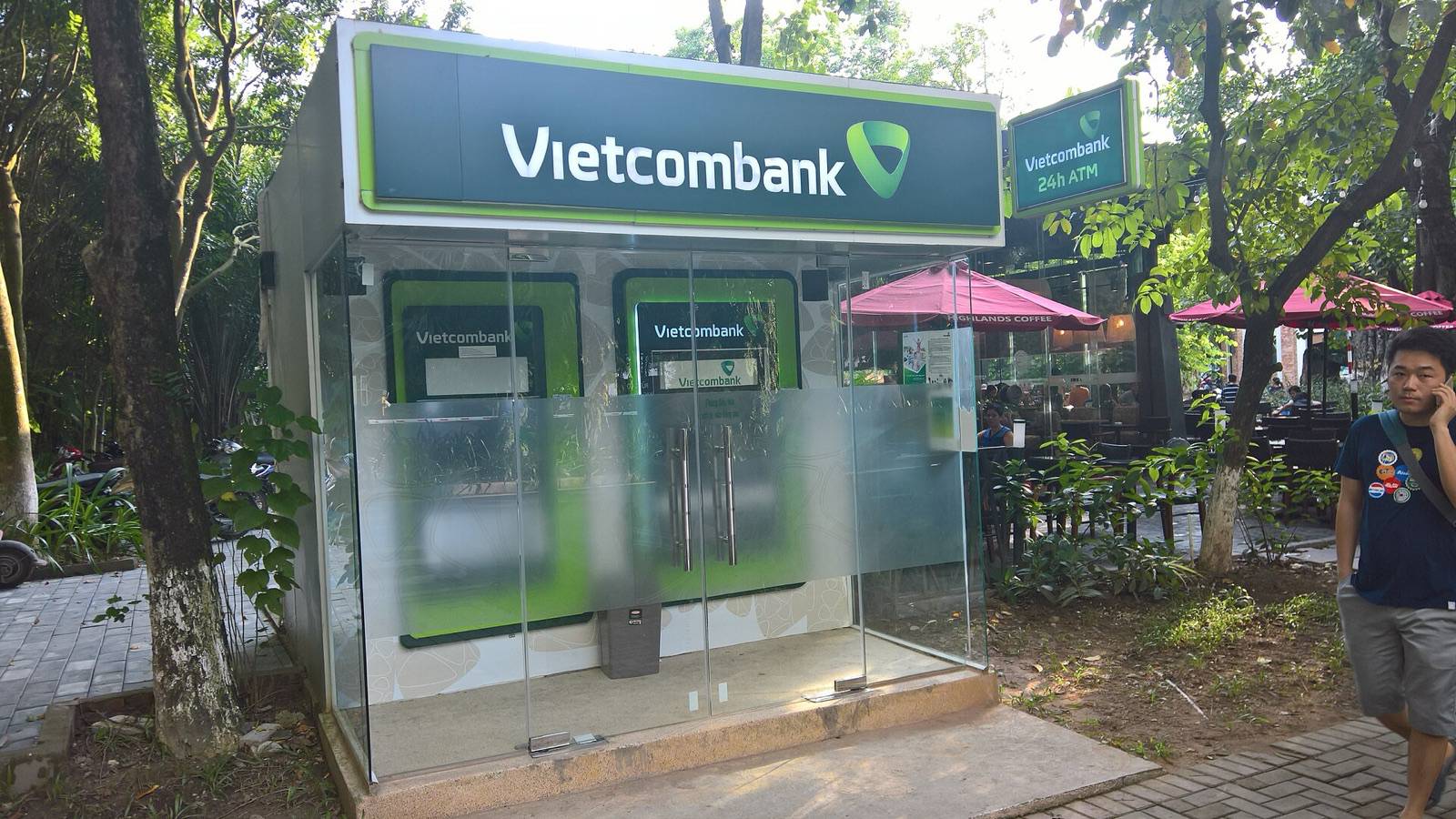
Check with your bank that your card works in Vietnam, as Smartraveller advises, and expect to pay twice: a fee to the Vietnamese bank and whatever your own bank charges. Vietnamese banks do not publish one common tariff for foreign cards, so treat these figures as a guide. A February 2026 traveler index from ATM Fee Saver reports fixed fees of 50,000 to 165,000 VND (about US$2 to US$6) per withdrawal at some banks, percentage fees of 2% to 5% at others, and per-withdrawal limits of 3 to 5 million VND (about US$115 to US$190) at most. The machine should show the local fee before you confirm.
| Way to pay | Works for visitors? | Typical cost | Watch out for |
|---|---|---|---|
| Cash (dong) | Everywhere | None once withdrawn | Theft; carry small amounts |
| Bank ATM | Yes, at most banks | Local fee plus your bank's fee | Skimming; caps per withdrawal |
| Visa or Mastercard | Hotels, many city businesses | Your bank's foreign fee | Being charged in your home currency |
| Local QR code | Only some countries' apps | Depends on your app | Not available to most visitors |
| US dollars | Exchange counters, some hotels | Exchange margin | Change only at official counters |
Two habits save money. When an ATM or card machine offers to charge you in your home currency, decline and choose dong; Wise's guide notes that the machine marks up the exchange rate when it converts for you (Wise). And withdraw larger amounts less often, within the cap, to cut fixed fees.
Use ATMs safely. Smartraveller says travelers have been robbed while withdrawing money and that card skimming happens, and advises using ATMs in banks, reputable hotels and shopping centers and keeping your card in sight when you pay. Our safety guide covers other scams.
Can foreigners pay with QR codes?
Some can. Local QR payments run through Vietnamese banking apps, so a visitor's app has to be connected to Vietnam's network to scan the codes. In August 2026 Tuoi Tre News reported QR links with China, South Korea, Thailand, Laos, Cambodia and Singapore. Chinese visitors can use apps including Weixin Pay and Alipay, and Singapore visitors several local e-wallets. The State Bank of Vietnam announced the South Korea link on 23 April 2026.
For other visitors, the same Tuoi Tre report mentions a Mastercard service that lets cardholders scan domestic QR codes, and a new VietQRGlobal option aimed at international travelers. Availability depends on your card issuer and app, so check before you rely on either. Otherwise, plan on cash and cards.
How much does a day in Vietnam cost?
Not much if you travel simply. Lonely Planet, in an October 2025 article, puts the average daily cost for budget travelers at US$40 to US$70 and says you can explore for under US$40 a day in dorms on a diet of pho and banh mi. Its typical prices, with our dong conversions:
| Item | Lonely Planet price (US$) | About (VND) |
|---|---|---|
| Hostel dorm bed | 5 to 10 | 130,000 to 260,000 |
| Basic room for two | 10 to 20 | 260,000 to 520,000 |
| Village homestay | 5 to 20 | 130,000 to 520,000 |
| Beach resort room | from 80 | from 2.1 million |
| Local bus ticket | from 1 | from 26,000 |
| Cup of drip coffee (ca phe) | 0.70 | 18,000 |
| Banh mi sandwich | from 0.70 | from 18,000 |
| Sit-down dinner for two | 15 | 390,000 |
| Daily budget, budget traveler | 40 to 70 | 1.0 to 1.8 million |
Getting around adds to the daily figure. Lonely Planet notes that ride-hailing apps tend to be cheaper than street taxis and show the price up front. See our getting around guide for train, bus and flight fares.
How do I avoid money scams?
Most money problems for visitors come from a handful of situations, and the government advice covers each one:
- ATMs and cards. Smartraveller reports robberies at ATMs and card skimming, so use machines inside banks, reputable hotels or shopping centers and keep your card in sight when you pay (Smartraveller).
- Street money changers. The UK government says changing money anywhere other than an official counter is illegal and you risk losing your cash (FCDO).
- Taxi fares. Lonely Planet reports meters that are rigged or switched off in tourist areas; a ride-hailing app fixes the price first.
- Gambling. Smartraveller asks visitors to report gambling scams to police.
Count your change and keep large notes separate from the small ones you spend at stalls. Our safety guide covers drink spiking, theft and other risks.
Should I tip in Vietnam?
Tipping is not mandatory in Vietnam. Intrepid Travel's guide says a small tip at restaurants is becoming more common, so it is a personal choice rather than an expectation (Intrepid Travel). The same guide notes that higher-value dong notes are plastic (polymer) and lower-value ones are paper.
Key facts at a glance
- Vietcombank's US dollar rates on 2 October 2026: 25,760 VND buying cash, 26,170 VND selling (Vietcombank).
- Declare cash above 15 million VND or US$5,000 when entering or leaving (FCDO).
- Changing money outside official counters is illegal (FCDO).
- Cross-border QR payments were linked with six countries in August 2026: China, South Korea, Thailand, Laos, Cambodia and Singapore (Tuoi Tre News).
- Budget travelers average US$40 to US$70 a day (Lonely Planet).
Limitations
Exchange rates change every day, and exchange counters and card networks use their own rates, so use the Vietcombank table as a reference point rather than a promise. ATM fees and limits differ by bank and change without notice; our figures come from a traveler index, not from bank tariffs, and the Wise guide we cite on currency conversion is several years old. QR payment links are expanding fast, so check your own bank or wallet app before you travel. Lonely Planet's prices date from October 2025 and will drift, especially in Hanoi, Ho Chi Minh City and resort areas.