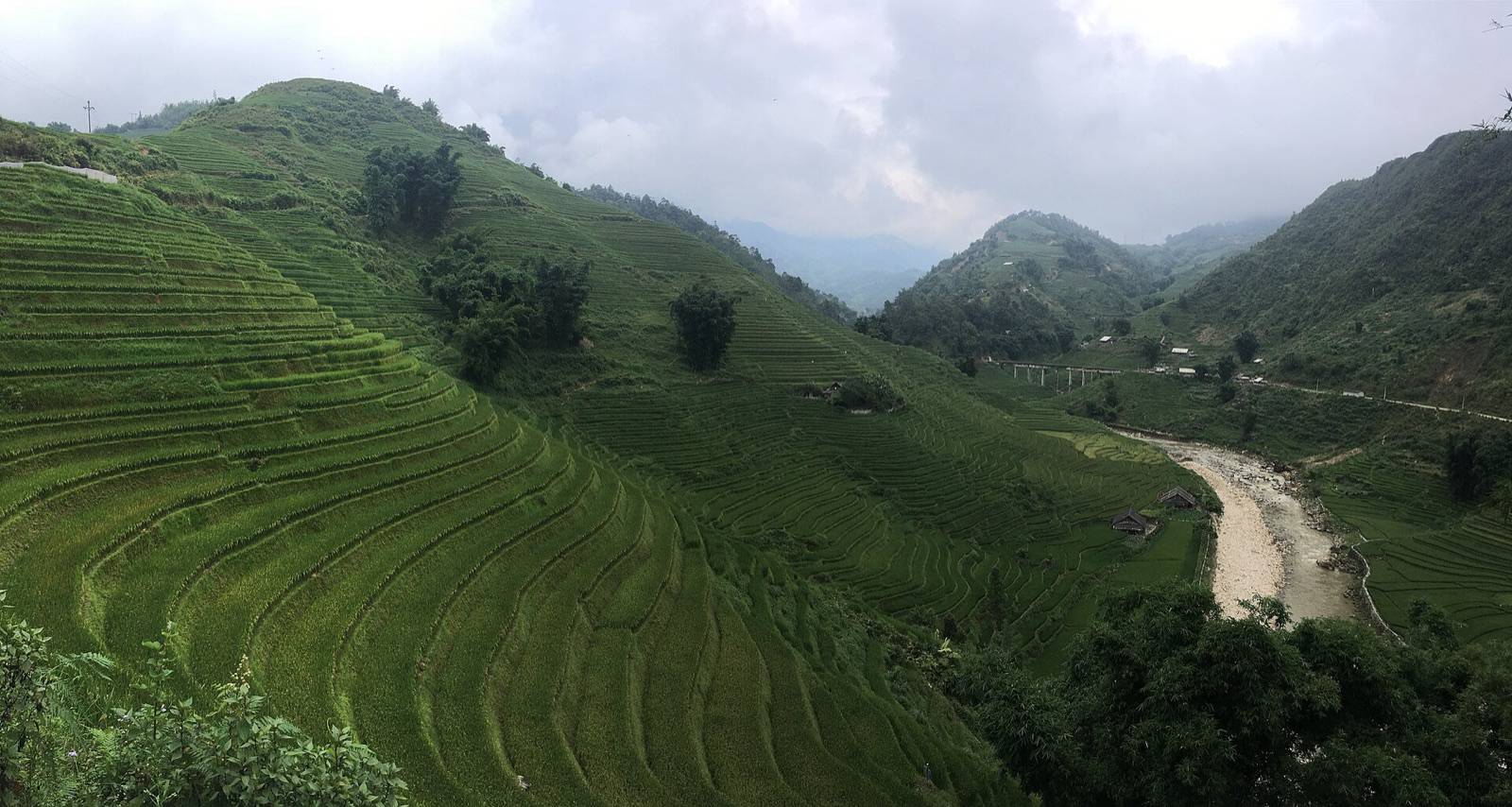
Sapa is worth the long trip for one reason: walking down into the Muong Hoa valley through terraced rice fields and villages. Town itself is busy and built-up, so give yourself two or three nights, spend at least one full day on foot, and treat the Fansipan cable car as a clear-weather bonus rather than the main event.
How we built this guide: we checked Sun World Fansipan Legend's operating notice of 28 September 2026 and Sun Group's 2026 price list, Lao Cai provincial pages, a March 2026 report on Lao Cai's trekking rules, WMO climate normals, traveler-reported cost data and 2025 to 2026 travel reports on 2 October 2026. Several sources are published by Sun Group, which runs the cable car. We did not visit for this update.
How does Sapa work for a first-time visitor?
Sapa is a mountain town used as a base, with the real draw in the valleys below it and the peaks above. The town sits at about 1,600 m above sea level, according to Lao Cai's foreign affairs department, which also names Muong Hoa valley, Cat Cat, Y Linh Ho, Ta Van, Lao Chai, Ta Phin and Nam Cang among the places with the finest terraces. Fansipan, at 3,143 m the highest peak in Vietnam, rises above the valley and is reached by cable car.
Two practical points shape a visit. Weather changes fast at this height, so a sunny morning can become thick cloud by noon. And administrative names changed in 2025: Lao Cai and Yen Bai provinces were merged under Resolution 202/2025/QH15, so you will see "Lao Cai" used for a much larger province than before.
How many days should you spend in Sapa?
Two nights is the minimum, and three is better. With three nights, use day one to arrive and walk Cat Cat, day two to trek through the Muong Hoa valley and sleep in a homestay, and day three for Fansipan if the forecast is clear. If you come on the night train, you gain a morning but lose some sleep.
Where should you stay in Sapa?
Stay one night in a valley homestay and the rest in or near town. The table sets out the trade-offs.
| Area | Best for | Trade-offs |
|---|---|---|
| Sapa town center | Restaurants, the Muong Hoa train to Fansipan, easy transfers | Crowded and noisy at peak times |
| Ta Van and Lao Chai (Muong Hoa valley) | Homestays among the terraces, trekking from the door | Basic rooms, limited heating, steep roads |
| Ta Phin | Red Dao village life in a different valley from Muong Hoa | Further from town, fewer services |
| Edge of town and hillside hotels | Views, quieter nights | Need taxis to reach restaurants |
Budget Your Trip puts traveler-reported hotel prices in Sapa at about $21 (550,000 VND) in the off-season and about $39 (1,000,000 VND) in the winter peak, with a range from about $12 to $77. For homestays, ask whether dinner and breakfast are included before you compare prices.
Which trekking villages are worth your time?
Walk at least one route down into the Muong Hoa valley; it is the landscape people come to Sapa for. Sun Group's 2026 trekking guide lists several routes by difficulty.
| Route | Distance and time | Level | Why go |
|---|---|---|---|
| Sapa to Cat Cat and Sin Chai | About 7 km | Beginner | Close to town, waterfall, silver crafts |
| Muong Hoa valley via Lao Chai and Ta Van | Varies by start point; most walkers take a day | Easy to moderate | The classic terraced valley walk |
| Tram Ton to Silver Waterfall and Ta Van | 20 to 30 km over 2 days, 1 night | Multi-day | High pass, waterfalls, valley finish |
| Suoi Ho to Ta Phin and Kim Ngan | About 43 km over 3 days, 2 nights | Challenging | Less visited villages |
| Fansipan on foot | 2 days, 1 night | Advanced | The summit without the cable car |
The Muong Hoa valley row is our own summary; the other rows come from Sun Group's guide.
Cat Cat
Cat Cat is the easiest village to reach, 2 to 3 km from town depending on which Sun Group guide you read, and the Lao Cai foreign affairs department puts it at about 1,500 m. Because it is the closest village to town, it gets the most visitors. Go early, then continue on foot toward Sin Chai to leave the crowds behind.
Lao Chai and Ta Van
These two villages sit in the Muong Hoa valley, about 30 minutes from town by road, and Sun Group's planting-season guide notes they are home to Giay and H'Mong communities. Walking between them through the terraces is the single best day in Sapa. Sleeping in a Ta Van homestay lets you see the valley at dusk and dawn.
Village fees and guides
Village and landscape fees are small. A 2025 Sun Group travel guide put village entry at 40,000 to 100,000 VND per visit, so carry small notes. On guides, a March 2026 Lao Cai directive reported by DTiNews requires trekking guides, porters and adventure tour operators to be listed and licensed, and bars accommodation providers and individuals from running adventure programs without licenses. In practice, book guided treks with a licensed company or through a homestay that works with one.
Is the Fansipan cable car worth it?
Yes, on a clear day; on a cloudy one, you may see only white. The cable car carries you up the 3,143 m mountain in about 15 minutes, and Sun Group's 2026 price list sets the adult return fare at 850,000 VND (about $33). Add 200,000 VND for the Muong Hoa mountain train from town and 150,000 VND for the funicular to the summit area if you want to skip the final stairs.
Hours vary by day. From 28 September 2026, after scheduled maintenance, Sun World Fansipan Legend runs trips up from 8am to 2:30pm Monday to Thursday, 8am to 3:30pm on Friday, 7:30am to 3:30pm on Saturday and 7:30am to 2:30pm on Sunday, with last trips down at 4pm or 5pm. Hours can change with the weather. The summit is far colder than town, so carry a warm layer even in summer.
When are the Sapa terraces green or golden?
Terraces are flooded for planting from May to mid-June, green through the summer, and golden from late August into October. Sun Group's planting-season guide dates the water season to May through mid-June and the golden harvest to September and October. Lao Cai's foreign affairs department calls mid-August to September the most beautiful time of year. Harvest moves village by village, so late August to late September is the safest bet for gold.
How do you get to Sapa?
Sapa is about 315 km from Hanoi, and most travelers take a limousine bus on the Noi Bai to Lao Cai expressway. According to Sun Group's September 2026 guide, the limousine or a private car takes 5.5 to 6 hours, a sleeper bus 6 to 7 hours, and the overnight train about 8 hours to Lao Cai, followed by 45 to 60 minutes by road. Compare operators and timetables on Hanoi to Sapa and see other options on Starting from Hanoi.
How do you get around Sapa?
Walk in town and on village trails, and use taxis or motorbike taxis for the valley roads. The Muong Hoa mountain train links town with the Fansipan cable car station. Roads into the valley are steep and narrow, so if you rent a motorbike, be confident on mountain bends; see getting around Vietnam for licensing rules.
What safety issues are specific to Sapa?
Weather and terrain cause most problems in Sapa. Our Vietnam safety page covers the general picture.
- Rainy season: Sun Group's 2026 trekking guide describes May to August as the rainy season and does not recommend it for most trekkers. WMO normals for Lao Cai, the lowland gateway, show rainfall peaking at about 304 mm in July and 374 mm in August (WMO). Trails turn to mud and slopes can slip.
- Cold: frost formed on Fansipan for six straight days in January 2025, per Tuoi Tre News.
- Fog: do not set off on unmarked trails alone in cloud, and tell your guesthouse your route.
- Licensed services: the 2026 provincial directive requires operators to prepare rescue plans for bad weather, so ask any trek operator about theirs.
Tip: pack waterproof shoes with grip, a rain shell and a warm layer whatever the month. Our what to bring list has the rest.
How much does Sapa cost?
Sapa is cheap day to day, and Fansipan is the big single expense. We converted at about 26,000 VND to US$1, between Vietcombank's published USD buying and selling rates (25,760 and 26,170) on 2 October 2026.
| Item | Price in VND | About in USD | Where we saw it |
|---|---|---|---|
| Fansipan cable car, adult return | 850,000 | $33 | Sun Group price list, Mar 2026 |
| Fansipan cable car, child 1 m to 1.4 m | 550,000 | $21 | Sun Group price list, Mar 2026 |
| Muong Hoa mountain train | 200,000 | $7.70 | Sun Group price list, Mar 2026 |
| Fansipan funicular | 150,000 | $5.80 | Sun Group price list, Mar 2026 |
| Village entry | 40,000 to 100,000 | $1.50 to $3.85 | Sun Group guide, 2025 |
| Budget day, per person | about 460,000 | about $18 | Budget Your Trip, traveler-reported |
| Mid-range day, per person | about 1,190,000 | about $46 | Budget Your Trip, traveler-reported |
Budget Your Trip also puts average meal spending at about $27 (700,000 VND) per person per day, a little higher than its Hanoi figure.
What food is worth seeking out in Sapa?
Eat the highland dishes you will not find easily in Hanoi. Sun Group's 2026 Lao Cai guide lists thang co, a traditional highland stew, salmon and trout hotpot, smoked buffalo meat and grilled pork. Hotpot is the cold-evening meal of choice, and street grills sell skewers after dark. Thang co is a strong-flavored stew, traditionally made with horse meat and offal, so order a small portion first if you are unsure.
When is the best time to visit Sapa?
September to November is the best all-round season for trekking, with golden terraces early on and drier trails later. The table pulls together the sources above.
| Months | What to expect | Source |
|---|---|---|
| December to February | Cold, cloud and frost; Fansipan can drop below zero | Tuoi Tre News |
| March to April | Drier months before the rains, at Lao Cai 65 to 121 mm of rain a month | WMO |
| May to mid-June | Water season on the terraces | Sun Group |
| July to August | Green terraces, heaviest rain, muddy trails | WMO, Sun Group trekking guide |
| September to November | Golden harvest, then clear and cool, about 18 to 22 degrees Celsius | Sun Group trekking guide |
Lao Cai sits far lower than Sapa, so use its WMO figures for rain patterns only, not temperatures. For the rest of Vietnam, see best time to visit Vietnam.
Key facts at a glance
- Altitude: Sapa town about 1,600 m (Lao Cai Department of Foreign Affairs); Fansipan 3,143 m (Sun World).
- Fansipan cable car: 850,000 VND adult return, about 15 minutes each way (Sun Group, March 2026).
- Cable car reopening: back in service on 28 September 2026 after scheduled maintenance (Sun World).
- Trekking rules: Lao Cai's March 2026 directive requires licensed trekking services with rescue plans (DTiNews).
- Distance from Hanoi: about 315 km, 5.5 to 6 hours by limousine (Sun Group, September 2026).
Limitations
Many of the practical figures on this page come from Sun Group, which operates the Fansipan cable car and publishes travel guides; we used them because they are dated and specific, but they are not independent. Cable car prices and hours were correct on 2 October 2026 and change with seasons, holidays and maintenance. Village fees vary by village and were reported in 2025. Harvest timing differs by altitude and year. Budget Your Trip figures are traveler averages, not quotes. Before you go, check the forecast for your trekking day, confirm cable car hours on the day, and book guided treks only with licensed operators.