Da Lat is the place to cool down between the beaches and the cities, and it rewards a slow pace more than a checklist. Give it two or three nights, base yourself near Xuan Huong Lake, spend your mornings outdoors, and treat canyoning as a serious sport that needs a licensed operator. Travel the mountain roads in and out by day.
How we built this guide: on 2 October 2026 we checked Vietnam's national tourism site, UNESCO's biosphere listing, Wikipedia's Da Lat climate tables, 2024 to 2026 Vietnamese news reports on the heritage train, landslides on the Mimosa and Prenn passes and the 2026 Flower Festival, past reports on canyoning accidents, and published cost data. Bus and flight figures come from our route guides, which checked Vexere and 12Go the same day. We did not visit Da Lat for this update.
How does Da Lat work for a first-time visitor?
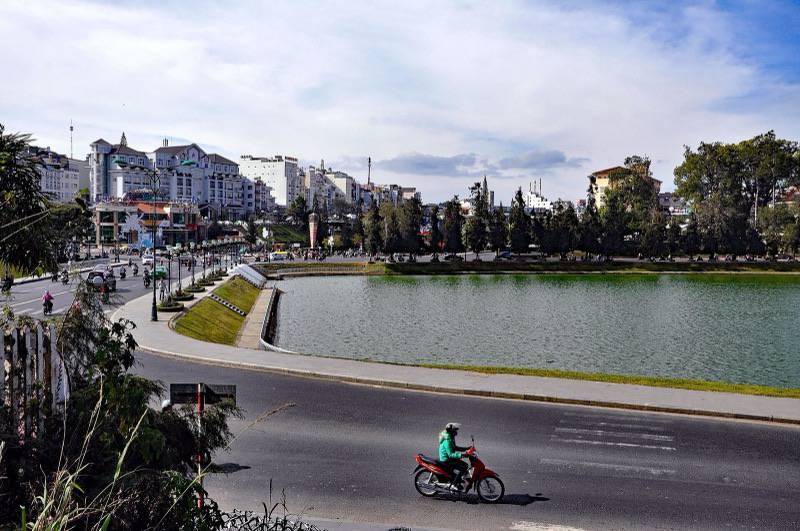
Da Lat is a highland town built around a lake, with pine hills, farms and waterfalls a short ride away. It sits about 1,500 m above sea level on the Langbiang Plateau, which is why the air feels so different from Nha Trang or Saigon. The lake, the market and the night market streets are walkable; Langbiang, the farms and Datanla falls are outside town.
The town also looks different on a map now. Da Lat ceased to exist as a city-level unit on 1 July 2025, when Vietnam removed its district tier (Wikipedia), and Lam Dong province absorbed Dak Nong and Binh Thuan under Resolution 202/2025/QH15 (National Defence Journal). Hotel addresses may show a ward such as Xuan Huong - Da Lat, where the railway station sits, per Wikipedia's station page.
What is the highland climate like in Da Lat?
Da Lat is mild all year: warm days, cool nights and a long rainy season. Wikipedia's climate tables, citing Vietnamese meteorological and building-science data, put average highs between about 21°C in December and 25°C in April, and average lows between about 12°C in January and 16°C in mid-year. The rainy season runs from May to October and the dry season from November to April, per Wikipedia.
| Month | Average high | Average low | Rain | What it means |
|---|---|---|---|---|
| January | 22.3°C | 11.7°C | 9 mm | Driest and coldest nights |
| April | 25.3°C | 14.7°C | 170 mm | Warmest days, showers return |
| July | 23.0°C | 16.2°C | 232 mm | Rainy season, green hills |
| September | 22.9°C | 16.0°C | 283 mm | Usually the wettest month |
| November | 21.7°C | 14.6°C | 93 mm | Rain easing, cool and clear |
The national tourism site's advice is simple: bring a sweater from November to January and an umbrella for the rain from April to November (vietnam.travel). In the wet months, keep each day's outdoor plans flexible.
How many days should you spend in Da Lat?
Two nights is enough for a first visit, and three lets you add an active day without rushing. A simple plan:
- Day one: the lake, the market and the railway station, with the short train to Trai Mat in the afternoon, then the night market for dinner.
- Day two: an early start on Langbiang or a coffee farm, a long lunch, then Truc Lam Monastery and Tuyen Lam Lake.
- Day three: canyoning at Datanla with a licensed operator, or a slow day of cafes and gardens if the weather turns.
Where should you stay in Da Lat?
Stay near Xuan Huong Lake for a first visit, so you can walk to food on cool evenings.
| Area | Best for | Trade-offs |
|---|---|---|
| Center, around Xuan Huong Lake and the market | Walking to the night market, cafes, the station | Traffic and noise, steep streets |
| Hillside villas and guesthouses on the edge of town | Views, quiet nights, more space | You need a taxi or ride-hailing after dark |
| Tuyen Lam Lake | Pine forest resorts near Truc Lam Monastery | Far from town food, cooler and damper |
| Farm stays and gardens outside town | Coffee, flowers and quiet | Basic transport, rooms vary a lot |
Budget Your Trip puts traveler-reported hotel prices at about US$19 (494,000 VND) off-season and US$35 (910,000 VND) at peak, in a range from about US$11 to US$75. Book early if you are coming for the Flower Festival or Tet.
What is worth your time in Da Lat?
Da Lat's best moments are small and slow: a cold morning on a hill, a coffee farm, a slow train. If time is short, skip the photo-stop parks.
The railway station and the Trai Mat train
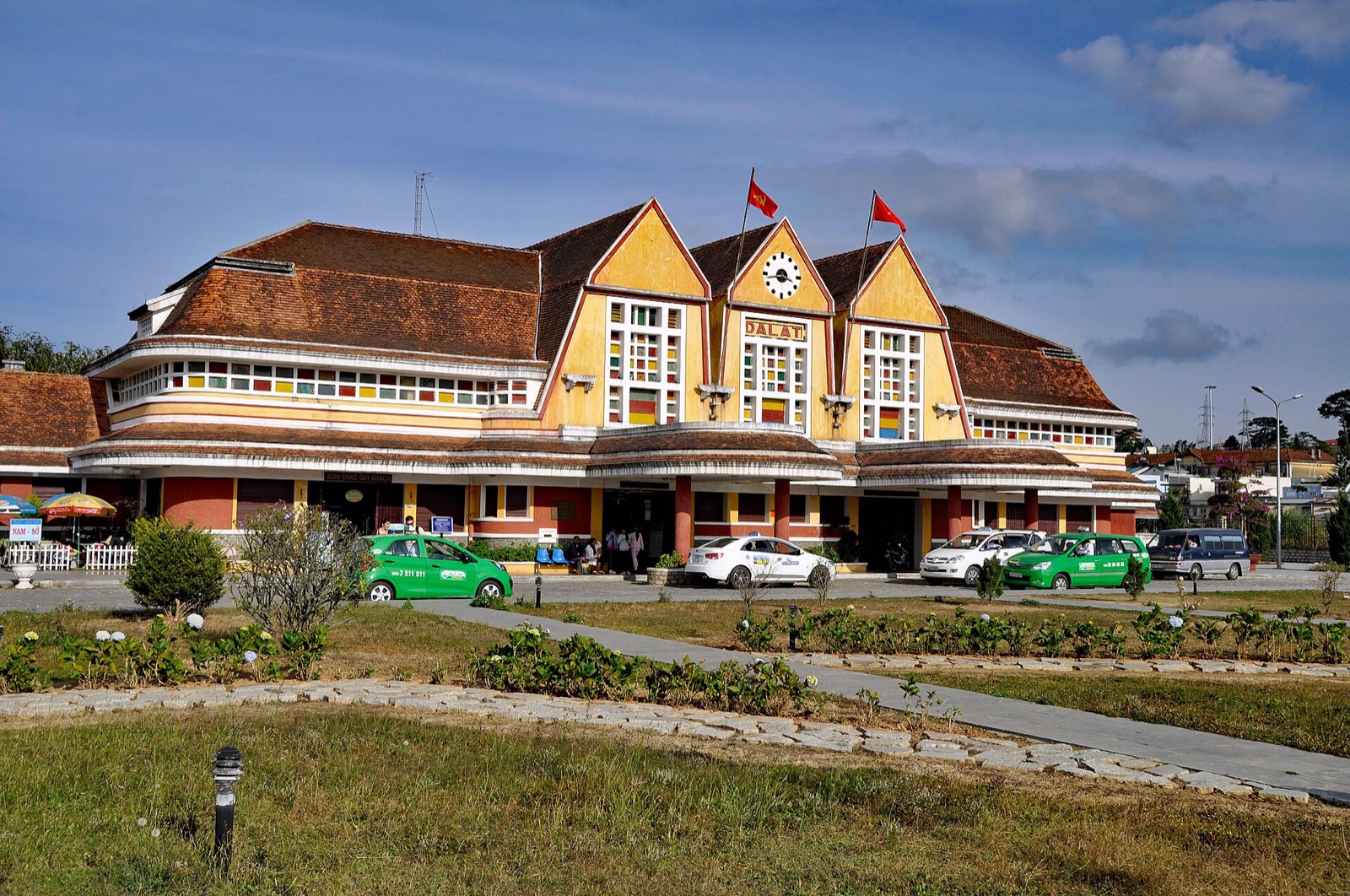
Start with the building on this page. Da Lat station was designed in 1932 by the French architects Moncet and Reveron and opened in 1938, and its three pointed roofs blend art deco with the tall communal houses of the Central Highlands, per Wikipedia. It was recognized as a national monument in 2001.
The old line down the mountain was dismantled after 1975, but a 7 km stretch to the village of Trai Mat runs as a heritage train. In March 2026, Nhan Dan reported about 500,000 visitors to the station in 2025, more than a quarter of whom rode the train, with a stop of about 30 minutes at the mosaic-covered Linh Phuoc Pagoda. Fares ran from 80,000 to 170,000 VND a trip in late 2024, with 25 percent off returns, per SGGP. Go in the morning if the forecast shows afternoon rain.
Langbiang on a clear morning
Langbiang is the mountain that gives the plateau its name, and it is worth an early start. Jungle Boss Tours' 2026 guide places the tourist area about 12 km north of the center, with its higher summit at about 2,170 m, adult entry at 50,000 VND, and a round-trip hike to that summit of 3.5 to 5 hours. Jeeps also run up to Radar Hill, but the prices we saw for them varied a lot between sources, so ask at the gate. The plateau around it is part of the Langbiang Biosphere Reserve, designated by UNESCO in 2015, with pine and montane forest rising to nearly 2,300 m.
Our view: walk rather than ride if you are fit, and start early for the best chance of a clear view.
Coffee farms and strawberry gardens
Da Lat's farms are the real countryside here, and a morning on one beats any theme park. The highlands grow arabica coffee at altitude: the Cau Dat area sits at about 1,500 m with more than 3,000 hectares under coffee, and its beans were once sold by Starbucks, per Tap chi Cong Thuong in 2017. The national tourism site suggests a farm and roastery tour with K'Ho Coffee.
Strawberries are one of the crops the cool climate supports, per Wikipedia, and gardens around town let visitors pick their own. Go to a garden you have chosen yourself. Touts who promise cheap strawberry picking and then steer visitors into jam shops were a big enough problem that the Prime Minister told Lam Dong's leaders to stamp it out in 2017, Tuoi Tre reported.
Truc Lam Monastery and Tuyen Lam Lake
This Zen monastery is the calmest place near town. It stands on Phuong Hoang Hill above Tuyen Lam Lake, its public area opened on 13 March 1994, and about 50 monks and 50 nuns practice there, per Wikipedia. Dress modestly, keep your voice down, and walk down to the lake afterwards.
Is canyoning in Da Lat safe?
Canyoning can be safe here, but only with a licensed operator, proper equipment and normal water levels. The usual trip at Datanla combines abseiling down waterfalls, natural rock slides, jumps into pools and jungle walking, and no experience is needed, according to the national tourism site.
The record shows what happens when those conditions are missing. In February 2016, three British tourists died at Datanla after being swept away by the current at a waterfall. Officials said the tour was run illegally, and the company's deputy director said they had not been given safety equipment, per DTiNews. In September 2018, a South Korean tourist died after a jump during a canyoning tour at the same falls, and Lam Dong's tourism department temporarily suspended all adventure tours there while it reviewed safety procedures, Viet Nam News reported.
Watch out: before you pay, ask to see the operator's license and insurance, ask how many guides go with each group, and check that every jump is optional and that your travel insurance covers canyoning. Do not go after heavy rain, when water levels rise fast. The UK government advises using approved adventure tourism companies and the safety gear they provide.
How do you get to Da Lat?
Fly from Ho Chi Minh City or Hanoi, or come by road from Saigon or Nha Trang. Lien Khuong airport is about 30 km south of town.
- From Ho Chi Minh City: 55-minute flights cost about US$33 to US$41 on 12Go for 14 October 2026, and sleeper and limousine buses take about 6 to 9 hours for 250,000 to 550,000 VND on Vexere. See Ho Chi Minh City to Da Lat.
- From Nha Trang: limousine vans and buses take about 3 to 4.5 hours over the Khanh Le Pass, from 180,000 VND on Vexere. See Nha Trang to Da Lat, our Nha Trang guide and the Starting from Nha Trang hub.
How do you get around Da Lat?
Walk in the center and use ride-hailing or taxis for everything else. Grab lists Lam Dong among its service areas in Vietnam. Many visitors rent a motorbike for the farms and waterfalls, but the roads are steep and wet for half the year. The UK government says you need the 1968 international driving permit with your home license, and that riding without third-party insurance is illegal. If you are not confident on hills in the rain, hire a car and driver for a day instead.
What safety issues are specific to Da Lat?
The roads into town are the main risk, and canyoning is the second. The rest is the usual care with bags and traffic; our Vietnam safety page covers the general picture.
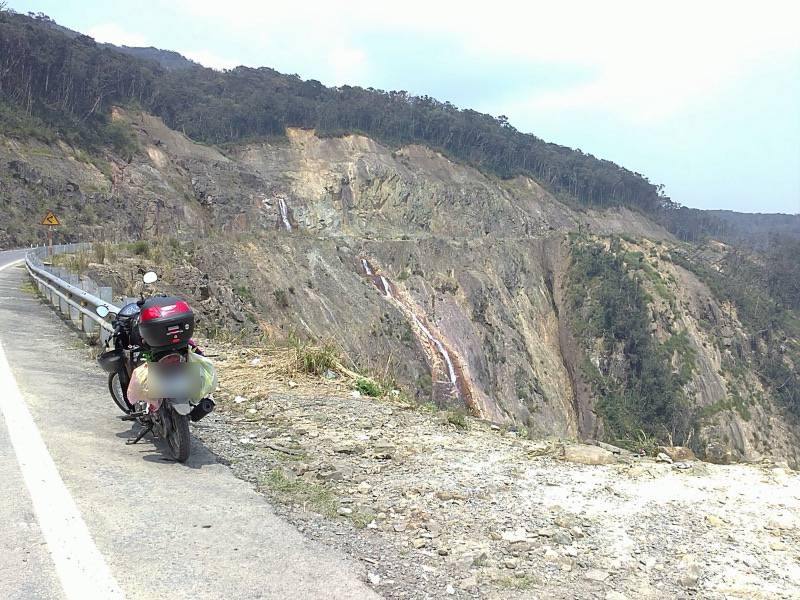
- Landslides on the passes: heavy rain in mid-November 2025 broke a section of the Mimosa Pass about 70 m long and 40 m deep, and the province declared an emergency (Bao Van Hoa). A 133 m viaduct over the slip opened on 22 April 2026 (Nhan Dan). The Prenn Pass, the road past Datanla, slipped on 17 November 2025 and closed again for repairs from 9 to 15 January 2026 (Bao Van Hoa).
- The Khanh Le Pass: the road to Nha Trang was still closed to vehicles from 18:00 to 5:00 on 26 September 2026, per Dan Tri. Travel by day.
- Cold nights: January lows average under 12°C, so ask whether your room has a heater and pack layers; our what to bring list helps.
- Touts: say no to anyone on a motorbike who offers to guide you to a cheap garden.
How much does Da Lat cost?
Da Lat is cheap day to day: Budget Your Trip's travelers spent about US$37 a day here, against about US$49 in Nha Trang. Prices were checked on 2 October 2026. We convert at 26,000 VND to US$1, rounded from Vietcombank's published rate that day (25,790 VND buying by transfer, 26,170 VND selling).
| Item | VND | About US$ | Source |
|---|---|---|---|
| Hotel room, off-season to peak average | 494,000 to 910,000 | 19 to 35 | Budget Your Trip, traveler-reported |
| Average daily spend per traveler | about 960,000 | 37 | Budget Your Trip |
| Meal at an inexpensive restaurant | 57,500 | 2.20 | Numbeo |
| Grilled rice paper at the night market | 25,000 to 30,000 | about 1 to 1.15 | Viet Nam News, October 2025 |
| Heritage train to Trai Mat, one trip | 80,000 to 170,000 | 3.10 to 6.50 | SGGP, December 2024 |
| Langbiang entry, adult | 50,000 | 1.90 | Jungle Boss Tours, 2026 |
| Flight from Ho Chi Minh City, one way | about 860,000 to 1,070,000 | 33 to 41 | 12Go, for 14 October 2026 |
Numbeo's Da Lat page draws on only eight contributors in the past 12 months, so treat its figures as rough.
What food is worth seeking out in Da Lat?
Eat for the cold: hot drinks, grilled snacks and hotpot. These are the classics Viet Nam News listed in October 2025:
- Banh trang nuong: a thin rice paper grilled over charcoal with egg, dried shrimp and sausage, about 25,000 to 30,000 VND at the night market.
- Banh mi xiu mai: a baguette dipped in pork meatballs and broth, about 25,000 VND, the classic breakfast.
- Hot soy milk: about 10,000 VND from street sellers, best on a cold evening.
- Artichoke tea: brewed from buds grown in the surrounding hills, about 20,000 VND.
- Lau bo: beef hotpot for two or three people, about 250,000 to 300,000 VND.
- Avocado ice cream: about 30,000 VND, made with local avocados.
When is the best time to visit Da Lat?
December to March is the best time for most visitors: dry, sunny and cool. The table pulls together the sources above.
| Months | What to expect | Source |
|---|---|---|
| December to March | Dry season, sunny days, cold nights; January averages 9 mm of rain | Wikipedia climate tables |
| Late December | The 11th Flower Festival opens on 19 December 2026 and closes on 31 December, centered on Lam Vien Square | Bao Van Hoa |
| April to May | The warmest days, with showers building; the national tourism site's pick if you want warmth | vietnam.travel |
| June to October | Rainy season, wettest in September, landslide risk on the passes | Wikipedia climate tables |
| November | Rain easing, but storms in 2025 caused major landslides | Bao Van Hoa |
Book early if your dates overlap the Flower Festival or Tet. For the rest of the country, see best time to visit Vietnam.
Key facts at a glance
- Altitude: about 1,500 m on the Langbiang Plateau (Wikipedia).
- Seasons: rainy May to October, dry November to April (Wikipedia).
- Railway station: opened in 1938, a national monument since 2001, with a 7 km heritage line to Trai Mat (Wikipedia).
- Biosphere reserve: Langbiang was designated by UNESCO in 2015 and covers 275,439 hectares (UNESCO).
- Flower Festival: 19 to 31 December 2026 (Bao Van Hoa).
Limitations
Several prices here are not from official lists: the train fares date from late 2024, the Langbiang entry fee comes from a tour operator's 2026 guide, and Langbiang jeep prices varied too much between sources to print. Check at the gate. The canyoning accident reports date from 2016 and 2018, and we found no newer official safety data, so judge each operator on its license, insurance and guide ratio. Road rules on the Mimosa, Prenn and Khanh Le passes have changed several times since November 2025, so check the latest notice before you travel. Climate figures are long-term averages, and Budget Your Trip and Numbeo figures come from small samples of travelers.