Most trips to Vietnam need a handful of standard travel vaccines, good insect repellent and solid insurance, not anything exotic. CDC recommends hepatitis A, hepatitis B and typhoid vaccines for most travelers on top of routine shots, and the rest depends on where you go and for how long. This page sets out what the health authorities say. It is not medical advice, so book a travel doctor or clinic before you go.
How we built this guide: we read the Vietnam pages of the US CDC, WHO's Viet Nam office, the UK's TravelHealthPro and the UK and Australian government travel advice on 2 October 2026, plus WMO climate data and an IQAir air quality report. We only repeat what those authorities say and link each point to its source.
Which vaccines do I need for Vietnam?
Start with the routine vaccines your home country recommends, then add the travel vaccines below. The UK government says to check recommendations at least eight weeks before your trip (FCDO), because some vaccines need more than one dose.
| Vaccine | CDC (United States) | TravelHealthPro (United Kingdom) |
|---|---|---|
| Routine, including measles (MMR) | Up to date before every trip; all travelers fully vaccinated against measles | Keep MMR up to date |
| Hepatitis A | Unvaccinated travelers aged 1 or older | Most travelers |
| Typhoid | Most travelers | Most travelers, especially when visiting friends and family |
| Tetanus | Part of routine vaccines | Most travelers; booster if over 10 years and medical care is limited |
| Hepatitis B | Unvaccinated travelers of all ages | Some travelers, such as long stays or healthcare work |
| Japanese encephalitis | People moving there or staying a month or more in risk areas; consider for shorter trips with high-risk rural activities | Rural stays of a month or more in season, or uncertain itineraries |
| Rabies | Depends on activities and access to post-exposure care | Animal contact, remote travel or stays over a month |
| Chikungunya | Generally not recommended | Some travelers, such as during outbreaks |
| Yellow fever | Not recommended; CDC lists it as not required | Not listed as a requirement on the page we read |
Sources: CDC and TravelHealthPro. The two bodies weigh hepatitis B differently, which is one reason to see a clinician rather than self-prescribe.
Is there malaria in Vietnam?
Yes, but only in some rural areas, and not on the classic city and coast route. CDC says there is no malaria in major cities such as Hanoi, Ho Chi Minh City, Da Nang, Hai Phong, Nha Trang and Quy Nhon, and none in the Mekong and Red River deltas. It recommends preventive medicine for travelers to certain rural provinces, with the drug depending on the province.
TravelHealthPro describes the risk as low in some southern and central highland provinces and rural areas, where it recommends awareness and bite avoidance. It lists no risk in large cities, the Red River delta, coastal areas north of Nha Trang and Phu Quoc island. The two agencies use different thresholds, so take your exact route to a travel clinic.
How do I protect myself from dengue and other mosquito-borne diseases?
Avoid bites, day and night. WHO's Viet Nam office says dengue peaks from June to October each year and that almost all cases and deaths occur in central and southern Vietnam. TravelHealthPro notes that dengue mosquitoes bite mainly during the day, so repellent matters on city walks, not just at dusk. CDC had a Level 1 dengue notice in place when we checked. Our best time to visit guide shows how the rainy months fall in each region.
Japanese encephalitis is also spread by mosquitoes. TravelHealthPro says the risk is year-round, with peaks from May to October, especially in the north. Zika is also listed as a risk by the UK and Australian governments, which matters if you are pregnant or planning a pregnancy.
CDC advises an insect repellent with at least 20% DEET and permethrin-treated clothing (CDC).
What should I do about rabies?
Treat every animal bite or scratch as urgent. Smartraveller says rabies occurs in Vietnam, is fatal without treatment, and that you should get medical help immediately after a bite or scratch. CDC notes that rabid dogs are sometimes found in Vietnam and suggests discussing pre-exposure vaccination if you will be around animals, cycling in the countryside or far from medical care. Do not pet street dogs, and keep away from monkeys at tourist sites.
Is the food and water safe?
Street food is a highlight of Vietnam, and the basic rules keep most stomachs happy. Smartraveller advises drinking only boiled or bottled water, washing your hands often and avoiding raw or undercooked food, and lists cholera, hepatitis and typhoid among the foodborne and waterborne risks. Hepatitis A and typhoid vaccines cover two of them. Smartraveller also advises urgent medical attention for a fever, diarrhea or suspected food poisoning.
How bad is the heat?
The south is hot all year and the center peaks in early summer. WMO climate normals for 1991 to 2020 give Ho Chi Minh City average daily highs of 31.6 to 34.9°C in every month (WMO). The UK government warns that heat and humidity can be severe, particularly in the rainy season, and that dehydration and heatstroke can be fatal (FCDO). Drink regularly, sightsee early and late, and rest at midday.
How bad is Hanoi's air in winter?
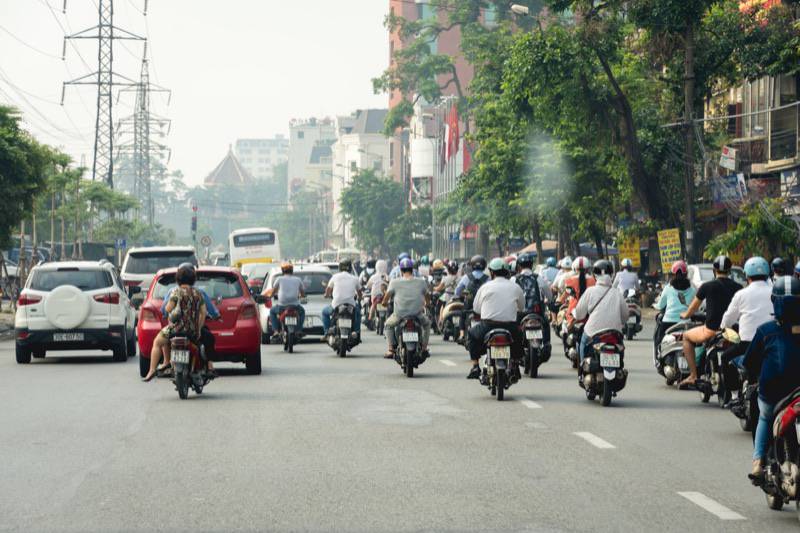
Bad enough to plan around. Smartraveller says air pollution in major cities can reach hazardous levels, especially from January to March, and that people with heart and lung conditions may be affected. On 15 January 2026 IQAir recorded Hanoi's air quality index above 170, in the unhealthy range, and put the city's 2024 average PM2.5 concentration at 45 micrograms per cubic meter, about eight times the WHO annual guideline (IQAir). IQAir links the winter peaks to temperature inversions that trap traffic, construction and crop-burning smoke near the ground. Our Hanoi guide covers the city itself.
Smartraveller's advice is to get medical advice if you are concerned, follow local guidance, monitor an air quality index and reduce your exposure.
Can I buy medicine at a Vietnamese pharmacy?
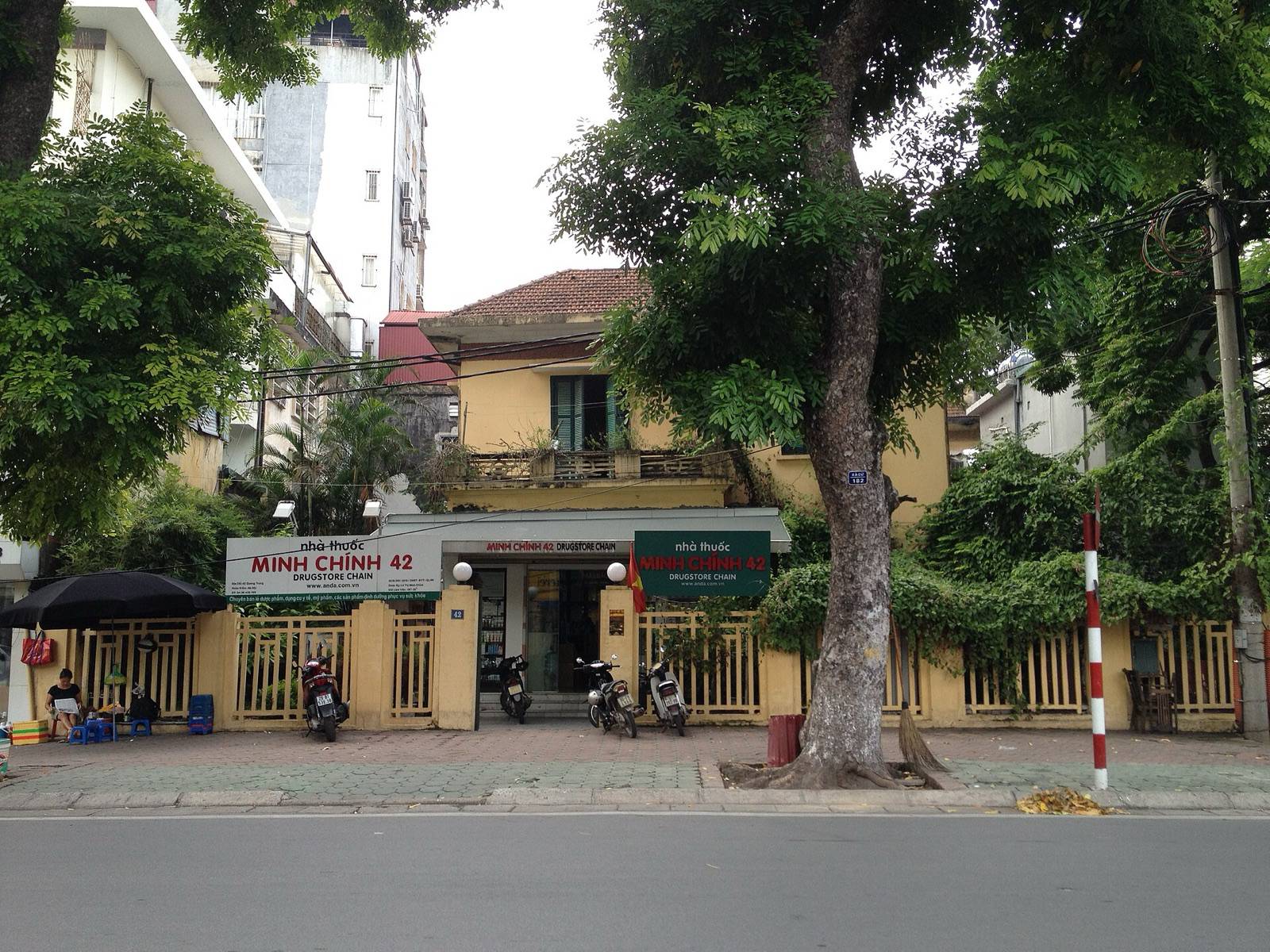
Vietnamese pharmacies are signed nha thuoc, as in the photo above, but do not rely on them for your regular medicines. The UK government says some medicines are hard to find in Vietnam and many are fake (FCDO). Bring enough for your whole trip, and see our packing list for the other health items worth carrying.
Vietnam also restricts medicines it classes as addictive or psychotropic, a group that can include some treatments for anxiety, depression, insomnia and addiction. The FCDO says it is illegal to carry more than seven days of these prescribed medicines, and asks you to carry the prescription and a doctor's letter giving your name, the medicine, the dose and the amount you need. Prescription medicines worth more than US$100 must be declared at customs and should travel in carry-on luggage (FCDO entry requirements). If you need more than the limit, contact a Vietnamese embassy before traveling.
Where can I get good medical care?
In the big three cities. Smartraveller says foreign private clinics operate in Hanoi, Ho Chi Minh City and Da Nang, while care at most public hospitals is poor, especially outside Hanoi and Ho Chi Minh City. Hospitals usually expect payment before treatment, and serious cases may need evacuation to Bangkok or Singapore, which is very expensive. The UK government publishes a list of doctors and medical facilities in Vietnam where some staff speak English, though the list was last updated in 2022. For an ambulance, dial 115.
| Situation | Where to go | Note from the sources |
|---|---|---|
| Minor illness, repeat prescription | Private international clinic in Hanoi, Ho Chi Minh City or Da Nang | May not meet Australian standards (Smartraveller) |
| Serious injury or illness | Major hospital in a big city, then insurer's evacuation team | Payment often required up front (Smartraveller) |
| Emergency anywhere | Dial 115 for an ambulance | Contact your insurer quickly (FCDO) |
Do I need travel insurance?
Yes, with medical evacuation. The FCDO says your policy should cover existing conditions, air ambulance, full medical costs and repatriation, and that the British Embassy does not pay medical bills. If you plan to ride a motorbike, check the policy covers it; see our safety guide.
Key facts at a glance
- CDC recommends hepatitis A, hepatitis B and typhoid vaccines for most travelers to Vietnam, plus routine vaccines (CDC).
- Dengue peaks June to October, with almost all cases in the center and south (WHO Viet Nam).
- No malaria risk in major cities such as Hanoi, Ho Chi Minh City and Da Nang (CDC).
- Hanoi's 2024 average PM2.5 was 45 micrograms per cubic meter, about eight times the WHO guideline (IQAir).
- Addictive and psychotropic medicines are limited to seven days' supply; carry the prescription and a doctor's letter (FCDO).
Limitations
This page summarizes public guidance and is not a substitute for a consultation. Vaccine advice differs between countries and changes as outbreaks come and go, so check CDC, TravelHealthPro or your own national service close to departure. The UK government says a health declaration, possibly including proof of vaccination, may be required from 1 July, and Australia gives the same warning; details were still unclear when we checked. Clinic standards, medicine availability and air quality vary from week to week. See a travel doctor, ideally eight weeks before you leave.