Eat each of Vietnam's famous dishes in the place it comes from. Pho, bun bo Hue, cao lau and com tam are found all over the country, but they are regional dishes first, and the version in their home city is the reference the rest of Vietnam copies or changes. So plan your meals the way you plan your route: north, center and south each get their own short list, and you save the rest for where it belongs.
How we built this guide: on 2 October 2026 we read the history of each dish in Wikipedia's entries, the tourism board's food and vegetarian guides, CDC's food safety advice and recent Vietnamese press reports that quote street prices with a date and a named eatery. We did not eat our way around the country for this page, and the prices are what those reports saw, not menus we checked ourselves. Prices convert at about 26,000 VND to US$1, between Vietcombank's US dollar buying and selling rates on 2 October 2026.
Why eat each dish in its home region?
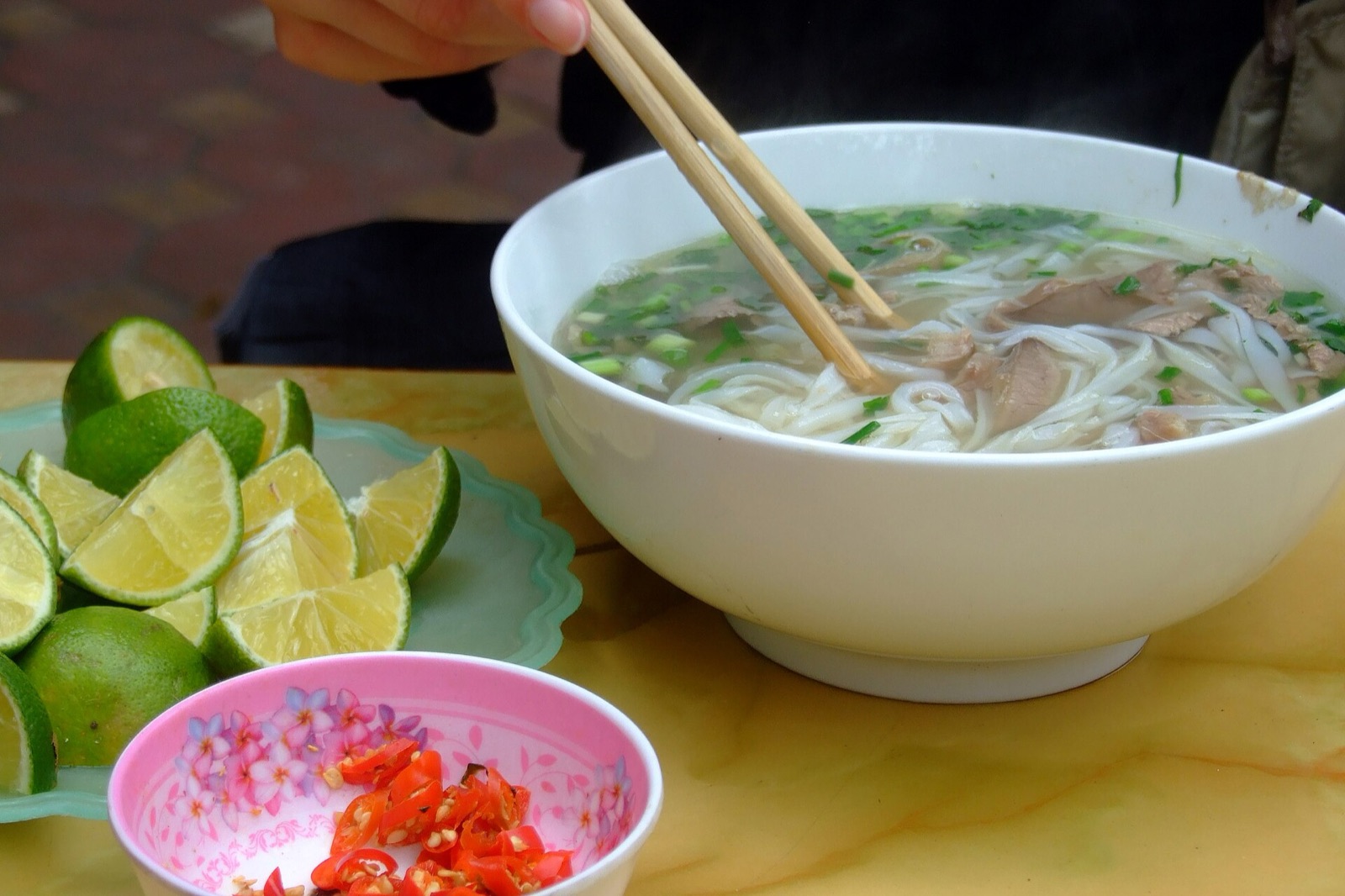
Because the dishes change as they travel, and some barely travel at all. Pho is the clearest example. Wikipedia describes northern pho as a clear, savory broth served with little more than spring onion and cilantro, while southern pho is sweeter and cloudier and comes with bean sprouts, chili, hoisin sauce and a pile of fresh herbs. Neither is wrong, but if you want to know what the original tastes like, have it in Hanoi.
Cao lau goes further: local tradition says it needs lye from Cham Islands plant ash and water from Hoi An's old Ba Le well, and it is rarely found outside the town (Wikipedia). And in the south, Wikipedia's entry on com tam says people in Saigon eat it the way Hanoians eat pho.
| Region | Eat here | Our guide | Dishes |
|---|---|---|---|
| North | Hanoi | Hanoi | Pho, bun cha, cha ca |
| Center | Hue | Hue | Bun bo Hue |
| Center | Hoi An and Da Nang | Hoi An, Da Nang | Cao lau, mi Quang |
| South | Ho Chi Minh City and the Mekong Delta | Ho Chi Minh City, Mekong Delta | Com tam, hu tieu, banh xeo |
If you are traveling the length of the country, our classic north-to-south route passes through every one of these cities.
What should I eat in the north?
Pho, bun cha and cha ca, all in Hanoi.
Pho
Pho is a northern dish. Wikipedia dates its modern form to between 1900 and 1907 in Nam Dinh province, southeast of Hanoi, with the villages of Van Cu and Dao Cu as its traditional birthplace. Nam Dinh-style pho is on Vietnam's national intangible cultural heritage list, and the commune that now includes Van Cu, in what is now Ninh Binh province, is gathering material for a UNESCO bid (VietnamNet, March 2026). Order pho tai for rare beef, pho chin for well-done beef, or pho ga for chicken.
Expect to pay 40,000 to 45,000 VND in most of Hanoi, and 50,000 VND or more at better-known places, after many shops raised prices by 5,000 to 10,000 VND in mid 2025 (VietnamNet, August 2025). Hanoi's Michelin-listed chicken pho shops charge from about 50,000 VND up to 160,000 VND for the most loaded bowls (VietnamNet, July 2026).
Bun cha
Bun cha is Hanoi's grilled pork and noodle dish: minced pork patties and pork belly grilled over charcoal, served with rice vermicelli, fresh herbs, pickles and a fish sauce dipping broth (Wikipedia). Its origin is unclear, though one story credits a Hanoi grill master around the turn of the 20th century. Barack Obama and Anthony Bourdain ate it together at Bun Cha Huong Lien in May 2016, and the restaurant still trades on the visit. In the Old Quarter a serving costs about 60,000 VND (about US$2.30) at well-known shops (VietnamNet, August 2026).
Cha ca
Cha ca is a sit-down meal rather than a street snack. Fish marinated in turmeric is grilled, then finished at your table in a hot pan with dill and spring onion and eaten with rice noodles, herbs, peanuts and a shrimp-based sauce (Wikipedia). The Doan family made it famous in 19th-century Hanoi, and their street was renamed Cha Ca after the dish. At La Vong it cost 175,000 VND (about US$6.70) per person in early 2025 (VnExpress International).
What should I eat in central Vietnam?
Bun bo Hue in Hue, then cao lau and mi Quang around Hoi An and Da Nang.
Bun bo Hue
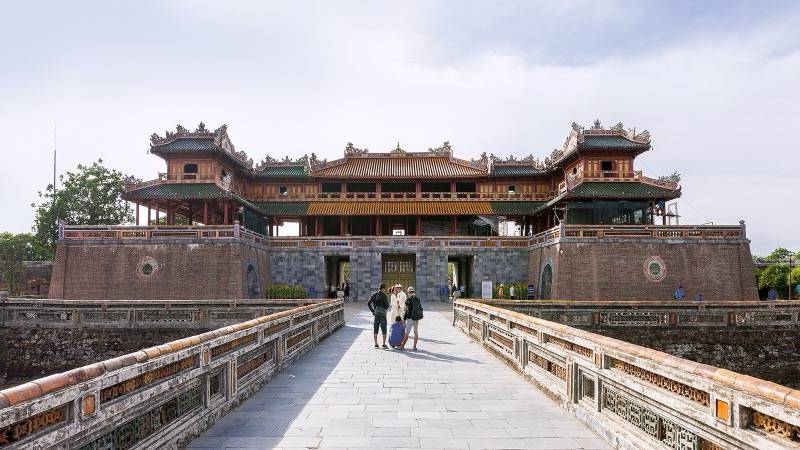
Hue was the seat of the Nguyen emperors, and the tourism board credits the royal court with the city's own refined cooking (vietnam.travel). Its best-known bowl is a beef noodle soup with lemongrass and fermented shrimp sauce, beef, pork knuckle and, traditionally, pig blood curds, on noodles thicker and rounder than pho's (Wikipedia). A bowl in Hue starts at about 45,000 VND (VnExpress International, July 2026). A 60-year-old wood-fired eatery on Nguyen Lo Trach Street charges 40,000 to 70,000 VND and does not open until about 8:30am, because it buys its beef and pork fresh each morning (Tuoi Tre News, August 2026).
Cao lau
Cao lau is Hoi An's own noodle dish. The noodles are treated with lye water, which makes them chewy and gives them a grayish or yellowish color (Wikipedia), and the bowl is built on fresh greens, bean sprouts and herbs, topped with sliced char siu pork, a splash of broth and crisp fried noodle squares, with lime and chili on the side. Because of the local ingredients the tradition demands, this is the one dish on this page you should not plan to find elsewhere. Vietnam Coracle's Hoi An food guide, first published in May 2024, lists a bowl at 40,000 VND (about US$1.50).
Mi Quang
Mi Quang comes from Quang Nam province, the area around Hoi An and Da Nang. It is wide rice noodles with shrimp, pork, chicken or fish in a small amount of strong, often turmeric-tinted broth, topped with peanuts and a toasted sesame rice cracker (Wikipedia). Vietnam Coracle found it at 25,000 to 40,000 VND in Hoi An in 2024, and a Michelin-listed Da Nang shop serving mi Quang and pork rice-paper rolls charges 35,000 to 80,000 VND (VnExpress International, June 2025).
What should I eat in the south?
Com tam, hu tieu and banh xeo, in Ho Chi Minh City and the Mekong Delta.
Com tam
Com tam means broken rice. Wikipedia traces it to Mekong Delta rice farmers who cooked the broken grains they could not sell in bad seasons, from where it spread to Saigon in the early 20th century. A plate usually carries a grilled pork chop (suon nuong), shredded pork skin (bi), a steamed egg and pork cake (cha trung), scallion oil and sweet fish sauce, and it is eaten at any meal with a fork and spoon (Wikipedia). At Ba Ghien, the Michelin-recognized com tam restaurant in Phu Nhuan, plates ran from 75,000 VND (about US$2.90) for basic grilled pork to 145,000 VND for the full mixed plate (VnExpress International, November 2024). Ordinary street stalls charge less.
Hu tieu
Hu tieu came to the south with Teochew Chinese migrants, and southern cooks made the rice noodles chewier (Wikipedia). The best-known version is hu tieu Nam Vang, Phnom Penh style, and you can order it as soup or dry with the broth on the side, as the MICHELIN Guide describes at Hong Phat, a Bib Gourmand shop open since 1975. A neighborhood shop in Binh Hung Hoa charges 30,000 VND a bowl, or 40,000 VND for a large one (VietnamNet, July 2026).
Banh xeo
Banh xeo is a crisp rice-flour and turmeric pancake named for the sizzle of the batter in the pan, filled with pork, shrimp and bean sprouts (Wikipedia). The southern version is the big one, about 30 cm across and enriched with coconut milk, while central cooks make smaller pancakes, and Hue has its own cousin, banh khoai. Tear off a piece, wrap it in lettuce or perilla leaves with mint and basil, and dip it in sweet and sour fish sauce. At Phung Hung Market in District 5 a portion cost 60,000 VND, plus 10,000 VND with egg (VnExpress International, June 2024).
What does street food cost?
Around 40,000 VND (about US$1.50) for a filling bowl of noodles, and more at famous shops. A 2026 industry report by iPOS.vn and Nestle Professional, covered by Tuoi Tre News, puts a typical bowl of pho or a similar noodle meal at around 40,000 VND and found that 53% of Vietnamese diners spent 31,000 to 50,000 VND on a lunch out. Prices are rising: in September 2026 a Ho Chi Minh City diner told Tuoi Tre News her alley pho had gone from 35,000 to 50,000 VND.
| Dish | Home | Price seen (VND) | About (US$) | Source and date |
|---|---|---|---|---|
| Pho | Hanoi | 40,000 to 45,000 | 1.50 to 1.70 | VietnamNet, August 2025 |
| Bun cha | Hanoi | about 60,000 | 2.30 | VietnamNet, August 2026 |
| Cha ca | Hanoi | 175,000 per person | 6.70 | VnExpress International, February 2025 |
| Bun bo Hue | Hue | from 45,000 | 1.70 | VnExpress International, July 2026 |
| Cao lau | Hoi An | 40,000 | 1.50 | Vietnam Coracle, May 2024 |
| Mi Quang | Quang Nam and Da Nang | 25,000 to 80,000 | 1.00 to 3.10 | Vietnam Coracle, 2024; VnExpress International, June 2025 |
| Com tam | Ho Chi Minh City | 75,000 to 145,000 (Michelin-listed) | 2.90 to 5.60 | VnExpress International, November 2024 |
| Hu tieu Nam Vang | Ho Chi Minh City | 30,000 to 40,000 | 1.15 to 1.55 | VietnamNet, July 2026 |
| Banh xeo | The south | 60,000 a portion | 2.30 | VnExpress International, June 2024 |
Watch out: Not everything on the table is free. Lonely Planet warns that tissues, bottled water, moist towels and peanuts set out at eateries may be charged, at around 15 to 20 US cents for a towel or 50 cents for peanuts, so check the bill. Carry small notes for stalls; our money guide covers cash and QR payments.
How do I eat street food safely?
Eat food that is cooked in front of you and served hot. That is the heart of CDC's advice: hot food should be hot and cold food cold, peel fruit yourself or wash it in bottled or disinfected water, avoid raw or undercooked meat and seafood, drink from factory-sealed bottles and cans, skip ice where you are unsure of the water, and wash your hands or use hand sanitizer before eating. CDC goes further than many travelers do and suggests avoiding street vendors altogether, while saying the same rules apply if you do eat from them.
Our practical reading: choose stalls that cook to order and turn food over quickly, and be more careful with raw herbs, salads and shellfish than with a bowl of boiling broth. Hepatitis A and typhoid vaccines protect against two foodborne infections; see our vaccinations and health guide for the full list.
Can vegetarians eat well in Vietnam?
Yes, with a few words of Vietnamese. The tourism board's vegetarian guide suggests looking for signs saying quan chay or com chay, often near pagodas and temples, and notes that Vietnamese Buddhists eat meat-free on the 1st and 15th of each lunar month, when markets and restaurants offer far more vegetarian food. Add chay to a dish name for the meat-free version, such as pho chay, banh mi chay or goi cuon chay.
The catch is fish sauce, a staple seasoning in savory dishes and dipping sauces. Use the guide's phrases: toi an chay (I am vegetarian), khong thit (no meat) and khong nuoc mam (no fish sauce).
Key facts at a glance
- Pho took its modern form between 1900 and 1907 in Nam Dinh province, southeast of Hanoi (Wikipedia).
- A typical bowl of pho or similar noodles costs around 40,000 VND, about US$1.50, in a 2026 industry report (Tuoi Tre News).
- Cao lau is rarely found outside Hoi An, by local tradition because of its lye and well water (Wikipedia).
- Bun cha cost about 60,000 VND at Old Quarter shops in August 2026 (VietnamNet).
- CDC advises eating food served hot and drinking factory-sealed drinks (CDC).
- Buddhists in Vietnam eat vegetarian on the 1st and 15th of each lunar month (vietnam.travel).
Limitations
Street prices move quickly, and several of our figures come from famous or Michelin-listed shops, which charge more than an ordinary stall. The dates range from May 2024 to September 2026, and the older ones, cao lau, mi Quang in Hoi An and banh xeo, are likely to be higher now. Origin stories for dishes like bun cha and bun bo Hue are traditions, not settled history, and we have relied on Wikipedia for most of them. Restaurant hours and closures change, especially around Tet, when many family-run shops close for several days. If you have a food allergy, carry a written note in Vietnamese, since fish sauce, shrimp paste and peanuts turn up in many dishes.