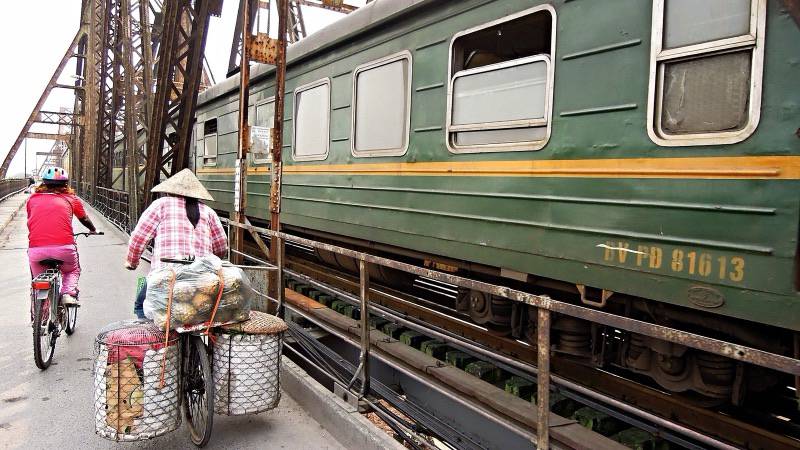
Two weeks is enough for Vietnam's classic north-to-south route if you skip the optional stops and fly once. Do Hanoi, one night on Ha Long or Lan Ha Bay, Ninh Binh, Hue, and Hoi An with Da Nang, then fly from Da Nang to Ho Chi Minh City and finish in the Mekong Delta. With three weeks, add Sapa and pick one of Phong Nha or Nha Trang with Da Lat. Trying to fit every stop in turns the trip into a string of bus offices.
How we built this guide: on 2 October 2026 we checked live train timetables and fares on Baolau, The Sinh Tourist's published coach schedule, operators' own sites, bus listings on 12Go and Vexere, average flight times on Kayak, and the climate notes of the Vietnam National Authority of Tourism. This is desk research: travel times are the operators' scheduled times, not our own stopwatch. Prices convert at about 26,170 VND to US$1, Vietcombank's selling rate that day.
Why skip a stop instead of rushing all of them?
The long legs between stops cost whole days, so every extra stop brings a transit day with it. The overnight train from Hanoi to Hue runs 12.5 to 14 hours on Baolau's timetable. The Sinh Tourist schedules its sleeper bus from Hoi An to Nha Trang at about 11 hours (schedule). The fastest train over the whole line, Hanoi to Ho Chi Minh City, takes 32 hours 45 minutes (Baolau).
A rushed stop, where you arrive at dawn and leave the next evening, usually gives you one sight and a lot of luggage wrangling. Two or three nights lets you unpack, recover from the overnight leg and still see the place. Our rule: add an optional stop only when you also add the days it needs.
How long does each stop deserve?
Each core stop deserves two to three nights, and the optional stops are only worth it with two nights each. These are our recommendations, counted in nights.
| Stop | 2 weeks | 3 weeks | Why |
|---|---|---|---|
| Hanoi | 3 | 4 | Arrival, Old Quarter, and the hub you return to between trips |
| Ha Long Bay or Lan Ha Bay | 1 on a boat | 1 on a boat | One night on the water is the sweet spot |
| Ninh Binh | 1, plus the evening of the train | 2 | Trang An and Tam Coc need a full day |
| Sapa | skip | 2 | About 6 to 6.5 hours each way by road |
| Phong Nha | skip | 2 | Caves; reached by overnight train to Dong Hoi |
| Hue | 2 | 2 | Citadel, tombs and the start of the central coast |
| Hoi An and Da Nang | 3 | 4 | Old town, beach and a Ba Na Hills day |
| Nha Trang or Da Lat | skip | swap for Phong Nha | Long legs in and out |
| Ho Chi Minh City | 1 | 1 | Gateway to the Mekong and your flight home |
| Mekong Delta (Can Tho) | 1 | 1 | 3.5 to 5 hours each way by bus |
Both plans also include one night on the train.
Which legs should you fly, and which should you ride?
Ride anything under about 6 hours, take the train overnight when it saves a hotel night, and fly the gaps that would eat a daytime. Times below are scheduled times from the sources linked.
| Leg | By ground | By air | Our call |
|---|---|---|---|
| Hanoi to Ha Long Bay | About 3 hours by bus or 9-seat limousine to Tuan Chau port (12Go) | No | Ride |
| Hanoi to Ninh Binh | About 2 hours by limousine van (12Go) | No | Ride |
| Hanoi to Sapa | 6 to 6.5 hours by sleeper bus (Sao Viet); about 8 hours by night train to Lao Cai (Baolau) | No airport near Lao Cai | Ride, by day |
| Ninh Binh to Dong Hoi (Phong Nha) | 7 to 8.5 hours by train (Baolau) | Not checked | Night train |
| Hanoi or Ninh Binh to Hue | 12.5 to 14 hours by train from Hanoi; about 13 hours by The Sinh Tourist's sleeper bus | About 1 hour 18 minutes (Kayak) | Night train; fly if short on time |
| Hue to Hoi An | About 4 hours by bus; 2.5 to 3.75 hours by train to Da Nang (Baolau) | No | Ride |
| Da Nang to Nha Trang | 9 to 11.5 hours by train (Baolau); about 11 hours by sleeper bus from Hoi An | About 1 hour | Fly |
| Nha Trang to Da Lat | About 4 hours by bus | Not checked | Ride |
| Da Lat to Ho Chi Minh City | 6.5 to 8 hours by bus (Vexere, The Sinh Tourist) | Not checked | Ride |
| Da Nang to Ho Chi Minh City | Two long hops via Nha Trang | About 1 hour 31 minutes (Kayak) | Fly |
| Ho Chi Minh City to Can Tho | 3.5 to 5 hours by bus | No | Ride |
Why the train wins from Hanoi to Hue
The overnight train turns a lost day into a night's sleep. On Baolau's listing for 7 October 2026, the SE3 left Hanoi at 19:20 and reached Hue at 07:50, and the SE1 left at 21:45 and arrived at 10:25. Fares started at 473,000 VND (about US$18) on the SE1 and 552,000 VND (about US$21) on the SE3, while private sleeper cabins on the same trains ran from about 1,900,000 VND (about US$73). The same SE3 calls at Ninh Binh at 21:36, so you can board there and skip the trip back to Hanoi.
A flight averages about 1 hour 18 minutes in the air (Kayak), but you still need transfers at both ends. Fly only if you are short on days.
Why you fly south of Da Nang
South of Da Nang the ground options get long. Overland, Da Nang to Saigon is two big hops: 9 to 11.5 hours by train to Nha Trang, then 10 to 12 hours by sleeper bus on The Sinh Tourist's schedule. The flight averages about 1 hour 31 minutes. For the whole country, Ho Chi Minh City to Hanoi flights average 2 hours 11 minutes (Kayak) against 32 hours 45 minutes on the fastest train.
Tip: Hue to Hoi An is the one short leg worth doing slowly. The Heritage trains HD1 and HD3 between Hue and Da Nang take 3 to 3.75 hours and cost 227,000 VND (about US$9) on Baolau, against 2.5 to 2.75 hours and fares from 78,000 VND (about US$3) on the regular SE trains. Our Hue to Hoi An route covers the car option over the Hai Van Pass.
North-first or south-first: which direction suits your season?
Pick the direction that puts you in each region in its better months, and accept that central Vietnam will be wet for part of the year either way. Here is what the Vietnam National Authority of Tourism says:
- North: cool to cold, misty and cloudy from December to March; hot, humid and rainy from June to August.
- Central: rainy and cloudy from September to February in Hue, with occasional flooding from September to November; warm, sunny and clear from March to August. Hoi An is rainy from September to January.
- South: dry, hot and sunny from December to April; sporadic rain, heat and humidity from May to November.
September to December: start in the north
Hanoi's autumn is the season the tourism board's monthly guide singles out for the capital. Going north-first lets you enjoy it, cross the wet center in the middle, and arrive in the south as its dry season starts in December. In these months, keep a spare day in Hue or Hoi An and check forecasts before overnight legs.
January to April: start in the south
The south is dry from December to April, so start there. You reach the center as it dries out: the monthly guide picks early March for Hoi An, after months of rain, and April for Hue's sunshine and clear skies. You then finish in the north as its cool, misty season ends.
May to August: direction matters less
The center is in its sunny season while the north and south are both rainy. Either direction works, so give Hue and Hoi An an extra night and keep the north and south short.
For month-by-month detail, see our best time to visit Vietnam guide.
What does the day-by-day plan look like?
Both plans run north-first. To go south-first, run the column from the bottom up: fly Ho Chi Minh City to Da Nang, and check the northbound night train times from Hue, which differ from the southbound times above.
| Day | 2 weeks | 3 weeks |
|---|---|---|
| 1 | Arrive in Hanoi | Arrive in Hanoi |
| 2 | Hanoi | Hanoi |
| 3 | Road to Ha Long or Lan Ha Bay, night on a boat | Morning bus to Sapa, about 6 to 6.5 hours |
| 4 | Back to Hanoi, about 3 to 4 hours | Sapa |
| 5 | Limousine to Ninh Binh, about 2 hours | Bus back to Hanoi |
| 6 | Ninh Binh, then SE3 night train at 21:36 to Hue | Road to Ha Long or Lan Ha Bay, night on a boat |
| 7 | Arrive in Hue at 07:50 | Back to Hanoi |
| 8 | Hue | Limousine to Ninh Binh |
| 9 | Bus or train to Hoi An | Ninh Binh |
| 10 | Hoi An | Ninh Binh, then night train to Dong Hoi |
| 11 | Da Nang day: Ba Na Hills or the beach | Phong Nha |
| 12 | Fly Da Nang to Ho Chi Minh City | Phong Nha |
| 13 | Bus to Can Tho, night in the Mekong Delta | Bus to Hue, about 5 hours |
| 14 | Back to Ho Chi Minh City, fly home | Hue |
| 15 | Bus or train to Hoi An | |
| 16 | Hoi An | |
| 17 | Da Nang day: Ba Na Hills or the beach | |
| 18 | Spare day in Hoi An | |
| 19 | Fly Da Nang to Ho Chi Minh City | |
| 20 | Bus to Can Tho, night in the Mekong Delta | |
| 21 | Back to Ho Chi Minh City, fly home |
Notes on the plan
The Ba Na Hills day is where the Golden Bridge on this page sits. The bridge opened in June 2018 at a resort about 1,489 m above sea level, reached by cable car, about 25 km southwest of Da Nang (Reatimes). It makes a full day out from Hoi An or Da Nang; see Da Nang to Hoi An for the 30 km link between the two.
For Phong Nha, two night trains fit: the SE3 leaves Ninh Binh at 21:36 and reaches Dong Hoi at 04:45, and the SE1 leaves just after midnight and arrives at 07:21 (Baolau). From Dong Hoi you continue by road to Phong Nha. The Sinh Tourist schedules Hue to Phong Nha at about 5 hours for 210 km, so plan on a similar ride back.
This plan uses Can Tho as the Mekong overnight base. The Sinh Tourist schedules Ho Chi Minh City to Can Tho at 3.5 hours, while FUTA's listing on Vexere shows about 5 hours. If your flight home leaves early on the last day, make the Mekong a day trip instead.
Swapping Phong Nha for Nha Trang or Da Lat
If beaches or cool highland air appeal more than caves, take the night train from Ninh Binh straight to Hue on day 10, so Hue is days 11 and 12 and Hoi An days 13 to 15. On day 16, fly Da Nang to Nha Trang (about 1 hour on Baolau). On day 17, take the bus up to Da Lat (about 4 hours on The Sinh Tourist's schedule), spend day 18 there, and on day 19 ride 6.5 to 8 hours down to Ho Chi Minh City. Days 20 and 21 stay the same. You lose the spare day, and Nha Trang shrinks to one evening, so pick the beach or the highlands if you want more than a taste. Doing Phong Nha and Nha Trang with Da Lat in one three-week trip is exactly the rush this page argues against. Our starting from Nha Trang and starting from Ho Chi Minh City hubs list the onward routes.
Key facts at a glance
- The SE3 train left Hanoi at 19:20 and reached Hue at 07:50, 12 hours 30 minutes, on Baolau's listing for 7 October 2026, with fares from 552,000 VND (about US$21).
- Da Nang to Ho Chi Minh City flights average about 1 hour 31 minutes (Kayak); the fastest Hanoi to Ho Chi Minh City train takes 32 hours 45 minutes (Baolau).
- The south is dry from December to April, and Hue sees occasional flooding from September to November (vietnam.travel).
- Vietnam Railways' current sales period covers trains from 17 August to 30 December 2026 (Bao Van Hoa).
- Tet falls on 6 February 2027 (Office Holidays).
Limitations
Fares and timetables move. The train and bus figures here come from searches made on 2 October 2026 for departures on 7 and 14 October, and they can change daily. The current rail sales period ends on 30 December 2026, and timetables can change around Tet, so recheck any train after that date on Baolau or Vietnam Railways' own booking site.
Flight times are Kayak's averages for time in the air. Add airport transfers, check-in and the chance of delays. Bus times are scheduled times; real trips can run long, and The Sinh Tourist's own schedule says arrival times depend on traffic.
Weather notes are seasonal patterns, not forecasts. From September to November, check storm and flood warnings for the central coast before you commit to overnight legs, and keep one spare day in Hue or Hoi An. We did not price hotels, cruises or entry tickets for this page. For choosing a bus operator, see Vietnam bus companies compared, and for every mode of transport, getting around Vietnam.