Vietnam is a good country for vegetarians, as long as you learn one word, chay, and watch for fish sauce. Chay is Vietnam's Buddhist vegetarian cooking, served in restaurants near pagodas and in meat-free versions of everyday dishes. Away from chay places, fish sauce, shrimp paste and meat broths are part of ordinary cooking, so a vegetable dish is not automatically vegetarian.
How we built this guide: on 19 October 2026 we read Vietnam's national tourism board's vegetarian guide, the MICHELIN Guide's vegetarian listings for Vietnam and its 2024 vegetarian lists for Ho Chi Minh City and Hanoi, Wikipedia's articles on Buddhist vegetarianism and Vietnamese cuisine, Michigan State University's open Vietnamese textbook, the US CDC's advice for travelers with allergies and the Vietnamese chef card published by Allergy & Anaphylaxis Australia. We did not eat at the restaurants named here, and we only name restaurants that appear on those published lists. The Vietnamese phrases have not been checked by a native speaker.
What does chay mean, and why is it so common?
Chay means vegetarian, and the tradition behind it is Buddhist. Vietnam's tourism board calls chay "the magic word" and says it sounds like "chai" (Vietnam Tourism). In Vietnam, as in China, Korea and Taiwan, Buddhist monks and nuns are expected to avoid meat and, traditionally, eggs, dairy and the five pungent vegetables such as garlic (Wikipedia). Most lay Buddhists are not full-time vegetarians, the same article notes, but many eat that way on set days.
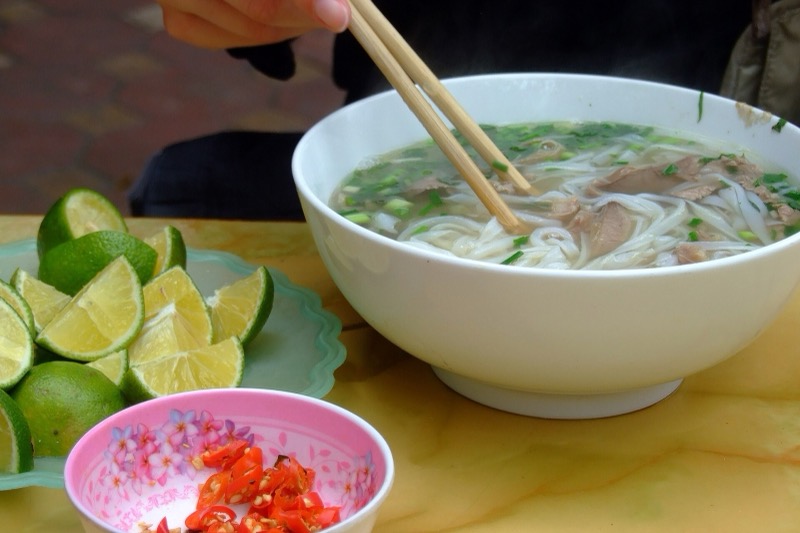
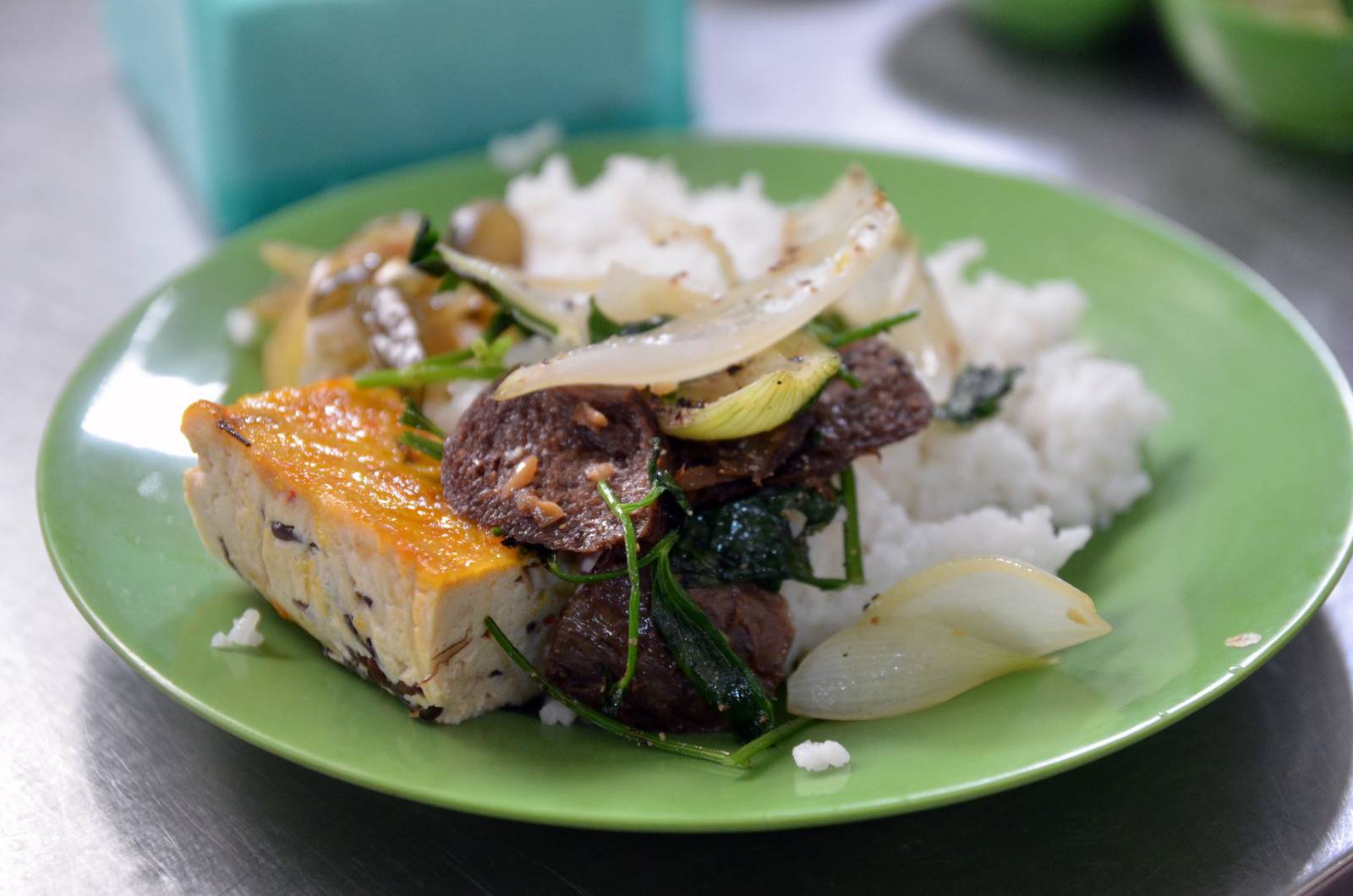
Two things make chay easy to order. Vegetarian dishes usually keep the name of the meat dish with chay added, such as phở chay or cơm chay, and they swap meat for tofu (Wikipedia). And the language has a word for the opposite: Michigan State University's textbook translates mặn as non-vegan food, in contrast to chay (MSU). Wikipedia adds that vegetarian food is almost always cheaper than the meat version.
When is vegetarian food easiest to find?
On the 1st and 15th days of each lunar month. Wikipedia says many lay Buddhists eat monastic-style vegetarian food on those two days, on Lunar New Year's Eve and on other commemorative days. The tourism board says that on the 1st and 15th you find extensive vegetarian options in restaurants and many vegetarian dishes in the morning markets.
The lunar calendar does not line up with the Western one, so the dates move every month; ask at your hotel or check a lunar calendar app. Lunar New Year's Eve is one of those days too, and our Tet guide explains what opens and closes around the holiday.
How do I find a chay restaurant?
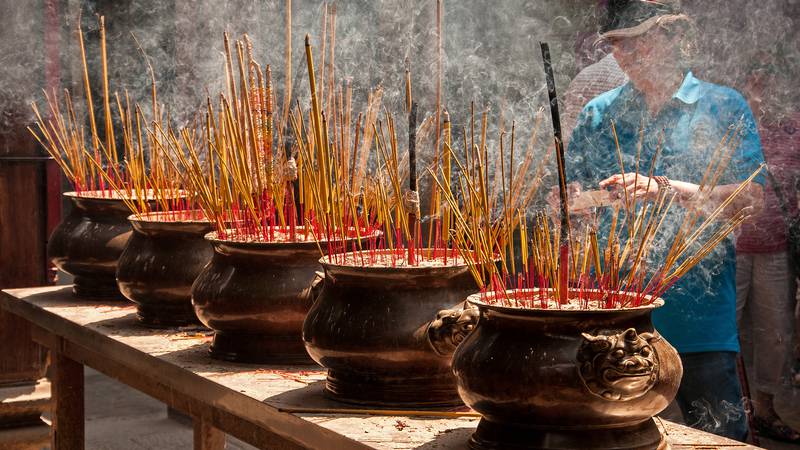
Look for the words on the sign. The tourism board suggests searching for quán chay or cơm chay, which mark vegetarian eateries, and wandering near pagodas and temples, where small places serve vegetarian meals to monks and nuns (Vietnam Tourism). The same words work in a map app.
At a chay restaurant you can relax: the whole kitchen is meat-free. At a regular restaurant, the menu may have a few dishes marked chay, but the shared sauces and stocks may not be meat-free, so use the phrases below.
Where do fish sauce, shrimp paste and meat broth hide?
In the seasoning, the dipping sauce and the soup base, which you cannot see on the plate. Wikipedia calls fish sauce the most commonly used condiment in Vietnamese cooking (Wikipedia).
| Ingredient | Vietnamese | Where it turns up | Source |
|---|---|---|---|
| Fish sauce | nước mắm | Served with most dishes; the base of many dipping sauces (nước chấm) | Wikipedia |
| Fermented shrimp paste | mắm tôm | Central cooking, including the broth of bún bò Huế | Wikipedia |
| Meat broth | in the soup itself | Pho, made with a long-simmered meat broth; hủ tiếu, on a pork-bone base | Wikipedia; MSU |
| Pork | thịt lợn | Bánh mì fillings, bánh chưng rice cakes | MSU |
| Egg | trứng | Bánh mì fillings | MSU |
The dish details come from Wikipedia's Vietnamese cuisine article and MSU's notes on Vietnamese foods, which describe bánh mì as filled with pork, eggs or pickles and bánh chưng as glutinous rice with mung beans and pork.
Watch out: At a regular noodle shop, the soup is the meat broth described above, so leaving out the meat does not make the bowl vegetarian. Eat noodle soups at chay restaurants.
What should I say when I order?
Three short phrases from the tourism board cover most orders: tôi ăn chay, không thịt and không nước mắm. The same pattern, không plus a food word, works for anything else you want left out. For more, see our Vietnamese phrases guide.
| English | Vietnamese | Source |
|---|---|---|
| I am vegetarian | Tôi ăn chay (or Tôi là người ăn chay) | Vietnam Tourism; Wikivoyage |
| No meat | Không thịt | Vietnam Tourism |
| No fish sauce | Không nước mắm | Vietnam Tourism |
| No shrimp paste | Không mắm tôm | Pattern above, with Wikipedia's term |
| No egg / no milk | Không trứng / không sữa | Pattern above, with MSU and A&AA terms |
| Vegetarian rice meal | Cơm chay | Vietnam Tourism |
| Vegetarian eatery | Quán chay | Vietnam Tourism |
Show the phrases written on your phone as well as saying them. Tones are hard to get right, and the written words remove the guesswork.
Which dishes are easy to get vegetarian?
The tourism board lists these as vegetarian dishes worth trying, and you add chay to the name to ask for the meat-free version of a standard dish (Vietnam Tourism):
| Dish | What it is (tourism board's description) |
|---|---|
| Phở chay | Vegetarian pho |
| Bánh mì chay | Vegetarian baguette |
| Gỏi cuốn chay | Fresh vegetarian spring rolls |
| Mì xào chay | Stir-fried vegetarian noodles |
| Nộm hoa chuối | Banana flower salad with lime |
| Đậu sốt cà chua | Braised tofu in tomato sauce |
| Rau muống xào tỏi | Stir-fried morning glory with garlic |
| Bánh xèo chay | Rice pancakes with bean sprouts and mushrooms |
| Cao lầu chay | Hoi An noodles in soy dressing with greens |
| Đậu hũ chiên sả ớt | Tofu fried with lemongrass and chili |
Outside a chay kitchen, even these can come with fish sauce on the side or in the seasoning, so ask. For the regional classics they are based on, see what to eat in Vietnam.
Where can I eat vegetarian in each city?
We list only restaurants named by two published sources: the tourism board's vegetarian guide and the MICHELIN Guide's vegetarian cuisine filter, which showed eight restaurants in Vietnam on 19 October 2026 (MICHELIN Guide).
| City | Tourism board's vegetarian guide | MICHELIN Guide, vegetarian cuisine |
|---|---|---|
| Hanoi | Uu Dam Chay, Aummee | Ưu Đàm (₫), Cồ Đàm (₫₫) |
| Hue | Organic An Lac; Spice Viet for its fig salad | None listed |
| Hoi An | Karma Waters, Am Vegetarian, Annen Hoi An | None listed |
| Da Nang | None named | Ngọc Chi (₫), Shamballa (₫₫) |
| Ho Chi Minh City | Hum Restaurant, Pi Bistro | Chay Garden (₫), Tales by Chapter (₫₫₫), Du Yên (₫₫), Hum Garden (₫₫) |
MICHELIN's page for Chay Garden lists it at 52 Vo Van Tan Street, open 10:30 to 21:00 daily, in the guide's cheapest price band (MICHELIN Guide).
Mixed restaurants can work too. In May 2024 the MICHELIN Guide named Cuc Gach Quan, Vietnam House and Madame Lam in Ho Chi Minh City for their vegetarian menus, alongside Chay Garden and Hum Garden (MICHELIN Guide). Its October 2024 Hanoi list added La Badiane, Ngon Garden, Quán Ăn Ngon and Senté to Cồ Đàm, which it describes as a Buddhist-inspired restaurant with a vegetarian tasting menu (MICHELIN Guide).
Is chay food vegan?
Often, but not always. Monastic Buddhist practice in Vietnam traditionally leaves out eggs and dairy as well as meat (Wikipedia), so food cooked to that standard is close to vegan. But a casual chay stall is not a monastery, and we found no rule that every chay kitchen leaves out egg. Ask about trứng (egg) and sữa (milk), the words used on Allergy & Anaphylaxis Australia's Vietnamese card (A&AA).
Garlic and onion work the other way. Strict monastic cooking avoids them, but the tourism board's list of vegetarian dishes includes morning glory stir-fried with garlic, so not every vegetarian dish follows the monastic rule. If you avoid alliums for religious reasons, a pagoda kitchen is your safest bet.
What if I have a food allergy?
Carry it in writing. The US CDC advises travelers with food allergies to get chef cards in the language of the country they visit, to bring a doctor's note if they carry injectable epinephrine, and to keep that medicine with them rather than in checked luggage (CDC Yellow Book). Allergy & Anaphylaxis Australia's Vietnamese card opens with Tôi bị dị ứng thức ăn nặng (I have a severe food allergy) and has the words for the main allergens, including đậu phộng (peanut), đậu nành (soy), lúa mì (wheat), mè or vừng (sesame), tôm (shrimp) and cua (crab).
Soy needs extra care, because tofu (đậu phụ, also called đậu hũ) is widely used in Vietnamese cooking (Wikipedia) and replaces the meat in many chay dishes. Our vaccinations and health guide covers clinics and pharmacies.
Key facts at a glance
- Vietnamese Buddhists eat meat-free on the 1st and 15th of each month, when restaurants and morning markets offer far more vegetarian food (Vietnam Tourism); Wikipedia places those days on the lunar calendar.
- Signs reading quán chay or cơm chay mark vegetarian eateries (Vietnam Tourism).
- Fish sauce is the most commonly used condiment in Vietnamese cooking (Wikipedia).
- Vietnamese monks and nuns traditionally avoid eggs and dairy as well as meat (Wikipedia).
- The MICHELIN Guide listed eight vegetarian restaurants in Vietnam on 19 October 2026: four in Ho Chi Minh City, two in Hanoi, two in Da Nang (MICHELIN Guide).
Limitations
We did not visit the restaurants on this page, and restaurant lists date quickly: the tourism board's guide has no publication date, and the MICHELIN articles on mixed restaurants are from 2024. Opening hours change, especially around Tet. What counts as chay varies by kitchen, so a dish that is vegan in one place may contain egg in another, and only the cook can tell you what went into a stock. The Vietnamese phrases have not been checked by a native speaker. If you have a serious allergy, use a printed chef card, ask every time, and carry your medicine.