A few dozen words of Vietnamese, plus the right word for "you", will carry you through markets, street stalls and taxis. Vietnamese is written in the Latin alphabet, so you can read signs from day one, but the marks over and under the vowels are tones, and they change the meaning. Learn the greeting and the pronouns first, then numbers, then food.
How we built this guide: on 19 October 2026 we checked every phrase against at least one teaching or reference source: Michigan State University's open textbook Basic Vietnamese (2023), the University of Queensland's Vietnamese Level 1 course outline, Vietnam's tourism board's etiquette and vegetarian guides, Wikipedia's articles on Vietnamese phonology and dialects, a Tuoi Tre News learner lesson, Wikivoyage's phrasebook, Wiktionary and the Vietnamese translations published by the charity Allergy & Anaphylaxis Australia. The Vietnamese on this page has not yet been checked by a native speaker. We do not give sound-alike spellings of the phrases; the MSU textbook has audio for every tone.
How do Vietnamese tones work?
Vietnamese has six tones, and five of them are marked on the vowel; the level tone has no mark (MSU, Basic Vietnamese). The same syllable with a different tone is a different word, as the textbook shows with ma:
| Tone | Mark | Example | Meaning | Pitch, as MSU describes it |
|---|---|---|---|---|
| ngang | none | ma | ghost | mid, level |
| huyền | grave: à | mà | but | low, falling |
| sắc | acute: á | má | mother, cheek | high, rising |
| hỏi | hook: ả | mả | grave (tomb) | low, rising |
| ngã | tilde: ã | mã | horse | low, rising and broken |
| nặng | dot below: ạ | mạ | young rice | low, dropping, cut off in the throat |
Wikipedia's phonology article describes hỏi as a dipping tone and ngã as rising with a strong creaky voice. In practice, nobody expects a visitor to get them all right. If you are not understood, show the word written down: the spelling keeps every mark, so a written word is clear even when your tone is not.
How is the south different from the north?
Standard Vietnamese is based on the Hanoi dialect (Wikipedia), but you will hear a different accent in Ho Chi Minh City. In the south, hỏi and ngã merge in speech, so there are five spoken tones, and d and gi sound like the y in "you" rather than a z (Tuoi Tre News).
| Feature | North (Hanoi) | South (Saigon) |
|---|---|---|
| Spoken tones | six | five, with hỏi and ngã merged |
| d and gi | like z | like y in "you" |
| r | like z | varies, often an r sound |
| v | v | traditionally like y, increasingly v |
| nặng tone | ends in a catch in the throat | ends with a slight rise |
| "yes" | vâng | dạ |
| "bowl" | bát | chén, tô |
| "spoon" | thìa | muỗng |
The sound changes come from Tuoi Tre News and Wikipedia's phonology article; the word pairs come from the vocabulary table in Wikipedia's Vietnamese language article.
How do I say hello politely?
Say chào plus the word for the person you are talking to. Xin chào is the formal hello, while chào alone is casual and much more common, and Vietnamese greetings usually follow the pattern "[me] chào [you]" (MSU). The word for "you" depends on age, and most of these words are family terms: em means younger sibling, chị older sister and anh older brother. Vietnam's tourism board lists when to use each one (Vietnam Tourism):
| Greeting | Use it for |
|---|---|
| Chào em | someone younger than you, male or female |
| Chào chị | a woman a little older than you |
| Chào anh | a man a little older than you |
| Chào cô | a woman old enough to be your aunt |
| Chào chú | a man old enough to be your uncle |
| Chào bà | a woman old enough to be your grandmother |
| Chào ông | a man old enough to be your grandfather |
| Chào bạn | a friend, or anyone when you are unsure |
To get someone's attention, add ơi: em ơi calls a younger server, chị ơi an older woman. MSU's textbook adds that ending a sentence with ạ makes it respectful when you speak to someone older, as in chào bà ạ. Tạm biệt means goodbye, and chào works for goodbye too.
Which everyday phrases matter most?
These eleven cover most short exchanges. The forms come from MSU's textbook, Wikivoyage's phrasebook and the tourism board.
| English | Vietnamese |
|---|---|
| Hello (formal) | Xin chào |
| Hello or goodbye (casual) | Chào |
| Goodbye | Tạm biệt |
| Thank you | Cảm ơn (also spelled cám ơn) |
| Yes | Vâng (north), dạ (south) |
| No | Không |
| No, thank you | Không, cảm ơn |
| Sorry, excuse me | Xin lỗi |
| I don't understand | Tôi không hiểu |
| Do you speak English? | Biết nói tiếng Anh không? |
| Where is the toilet? | Nhà vệ sinh ở đâu? |
Không, cảm ơn is the phrase for street vendors, motorbike taxi drivers and anyone offering a tour. Say it with a smile and keep walking.
How do I ask the price and bargain?
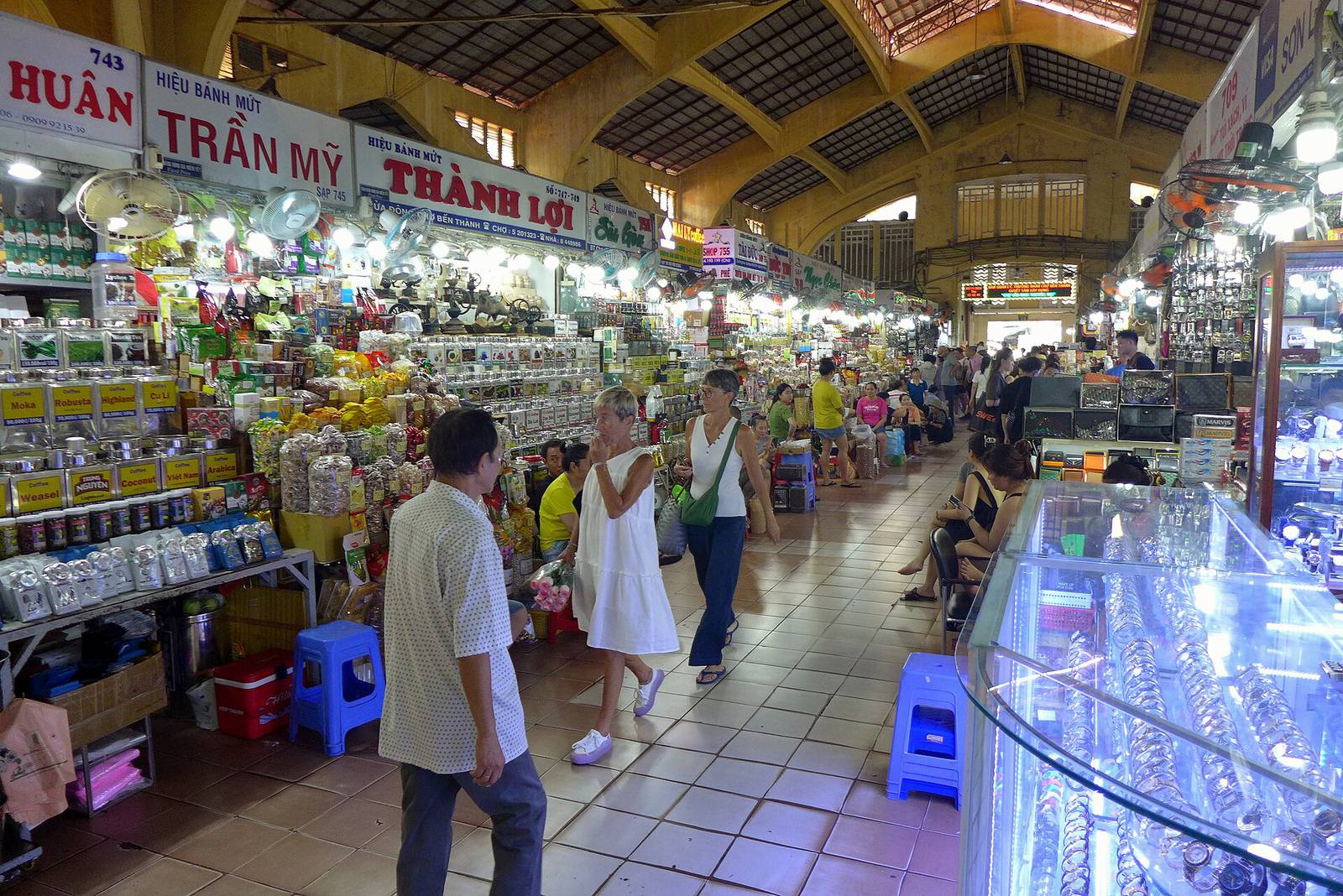
Ask bao nhiêu tiền? (how much?), then react. The University of Queensland's beginner course teaches bao nhiêu tiền for prices and the words quá (too) and lắm (very) for bargaining (UQ).
| English | Vietnamese |
|---|---|
| How much? | Bao nhiêu tiền? |
| Too expensive | Đắt quá |
| To bargain | Mặc cả |
| Discount, price cut | Giảm giá |
| Cash / card | Tiền mặt / thẻ |
| Change (money back) | Tiền thừa |
| Receipt | Hóa đơn |
The shopping words come from MSU's Chapter 13 vocabulary and đắt quá from Wikivoyage. Bargain gently, in markets only, as our etiquette guide explains.
How do numbers and prices work, and what does "k" mean?
Prices are big numbers, so learn one to ten, then trăm (hundred), nghìn or ngàn (thousand) and triệu (million). MSU's numbers chapter gives:
| Number | Vietnamese | Number | Vietnamese |
|---|---|---|---|
| 1 | một | 9 | chín |
| 2 | hai | 10 | mười |
| 3 | ba | 15 | mười lăm |
| 4 | bốn | 20 | hai mươi |
| 5 | năm | 21 | hai mươi mốt |
| 6 | sáu | 100 | một trăm |
| 7 | bảy | 1,000 | một nghìn, một ngàn |
| 8 | tám | 1,000,000 | một triệu |
Two traps: five becomes lăm at the end of a number, and one becomes mốt at the end of 21, 31 and so on.
In shops, three habits matter. Written prices use a dot as the thousands separator, so 10.000 đ is ten thousand dong; people drop the word đồng when speaking; and they shorten round amounts, so bốn trăm means 400,000 and một trăm rưỡi means 150,000 (MSU). Menus and signs also use k for thousand, according to a September 2026 money guide on vietnamtourism.com. A price of 50k is 50,000 VND, about US$1.90 at Vietcombank's rates on 19 October 2026 (25,670 dong buying, 26,080 selling per dollar). Our money guide covers notes and cards.
How do I ask for directions?
Put the place first and add ở đâu? (where is?), as in nhà vệ sinh ở đâu?. For a taxi or motorbike ride, these words do the rest:
| English | Vietnamese |
|---|---|
| Left / right | trái / phải |
| Turn | rẽ, quẹo |
| Go straight | đi thẳng |
| U-turn | quay đầu |
| Intersection | ngã tư (four-way), ngã ba (three-way) |
| Stop (the vehicle) | dừng xe |
| Motorbike taxi | xe ôm |
| City bus / long-distance bus | xe buýt / xe khách |
| Train | tàu hỏa, tàu lửa |
| I'm lost | Tôi bị lạc |
The direction and transport words come from MSU's Chapter 14, and trái, phải and tôi bị lạc from Wikivoyage. Easier still, book through an app so you never have to give directions; see our Grab and taxi guide.
Which food words help at a street stall?
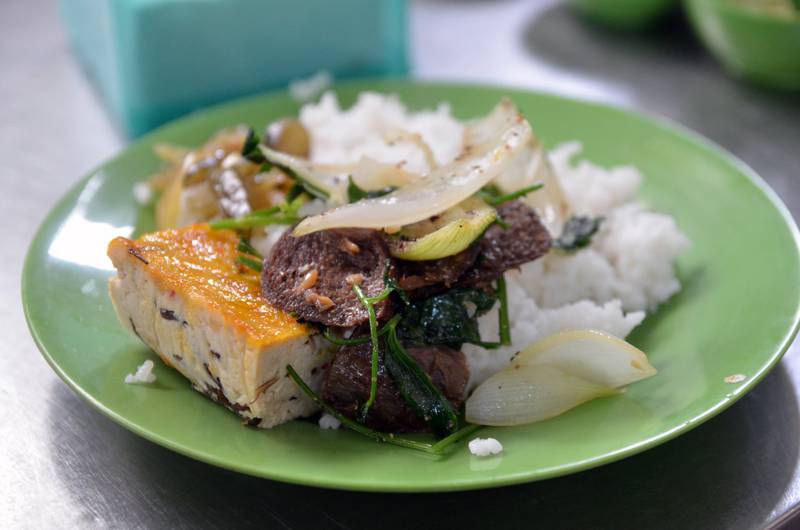
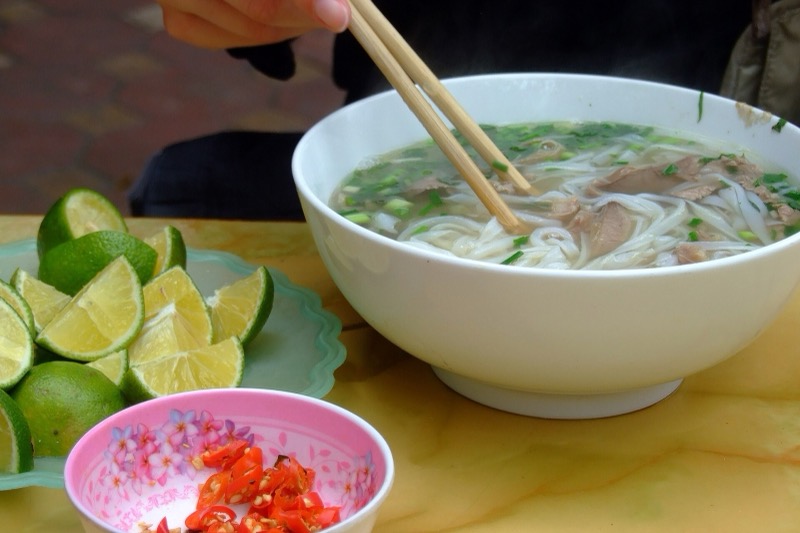
Order with cho tôi (give me) plus the dish. The UQ course teaches the verb cho for ordering, and the food words below come from MSU's Chapter 12 vocabulary and food notes:
| English | Vietnamese |
|---|---|
| Rice / rice noodles | cơm / bún |
| Meat, chicken, beef, pork | thịt, thịt gà, thịt bò, thịt lợn |
| Fish, shrimp, crab, seafood | cá, tôm, cua, hải sản |
| Egg / vegetables | trứng / rau |
| Spicy / not spicy | cay / không cay |
| Vegetarian | chay |
| Delicious | ngon |
| Chopsticks, bowl, spoon | đũa, bát or chén, thìa or muỗng |
| The bill, please! | Em ơi, tính tiền! |
The bill phrase is Wiktionary's example, addressed to a younger server; use anh or chị instead of em for an older one. For what to order, see what to eat in Vietnam.
How do I explain a diet or a food allergy?
Use short, clear phrases, and carry them written down. For a vegetarian diet, the tourism board suggests tôi ăn chay (I am vegetarian), không thịt (no meat) and không nước mắm (no fish sauce). For allergies, the US CDC advises carrying chef cards in the language of the country you visit (CDC Yellow Book). Allergy & Anaphylaxis Australia publishes a Vietnamese chef card and phrase sheet with these translations (A&AA):
| English | Vietnamese |
|---|---|
| I have a severe food allergy | Tôi bị dị ứng thức ăn nặng |
| Peanut | đậu phộng |
| Egg / milk and dairy | trứng / sữa |
| Shellfish, including shrimp and crab | thủy hải sản có vỏ, bao gồm tôm, cua |
| Fish | cá |
| Soy / wheat / sesame | đậu nành / lúa mì / mè (vừng) |
| If you are unsure what the food contains, please tell me | Nếu quý vị không rõ trong thức ăn có những thứ gì, xin quý vị cho tôi biết |
Wiktionary labels đậu phộng as southern and lists lạc as another word for peanut (Wiktionary), so a card with both is safer in the north.
What should I say in an emergency?
Dial first, talk second: Canada's travel advice lists 113 for police, 114 for the fire service and 115 for medical help (Government of Canada, updated 13 October 2026).
| English | Vietnamese | Source |
|---|---|---|
| Help! | Cứu tôi với! | Wikivoyage |
| Please call an ambulance | Làm ơn gọi xe cứu thương | A&AA |
| I need a hospital / a doctor | Tôi cần đi bệnh viện / bác sĩ | A&AA |
| I am having a severe allergic reaction | Tôi đang bị phản ứng dị ứng trầm trọng | A&AA |
| Where is the nearest pharmacy? | Nhà thuốc Tây gần nhất là ở đâu? | A&AA |
| Police | cảnh sát, công an | Wikivoyage |
Our safety guide and health guide cover what to do next.
What etiquette goes with the words?
The pronouns are the etiquette. Choosing anh, chị or em shows that you have noticed someone's age, which is why people may ask how old you are. Greet the oldest person first, keep your voice calm, and use bạn when you cannot tell. Our etiquette and customs guide covers greetings, temples and table manners in more detail.
Key facts at a glance
- Vietnamese has six tones and five tone marks (MSU); Southern speech merges hỏi and ngã (Tuoi Tre News).
- Standard Vietnamese is based on the Hanoi dialect (Wikipedia).
- Written prices use a dot for thousands, so 10.000 đ is ten thousand dong (MSU).
- 50,000 VND was about US$1.90 on 19 October 2026 (Vietcombank).
- Emergency numbers: 113 police, 114 fire, 115 medical (Government of Canada).
Limitations
The Vietnamese on this page has not been checked by a native speaker, so treat it as a starting point and expect people to correct you kindly. Pronouns and polite endings depend on age and relationship, and usage differs between regions, generations and families. Some sources disagree on details, for example on how to describe the hỏi tone. Our phrases follow textbook forms, which can sound formal in a busy market. For allergies, use a printed card and, if you can, have it checked by someone who reads Vietnamese before you travel.